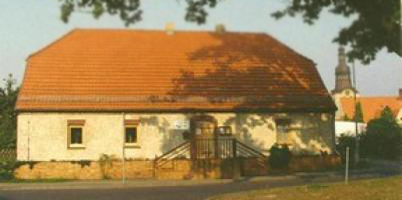
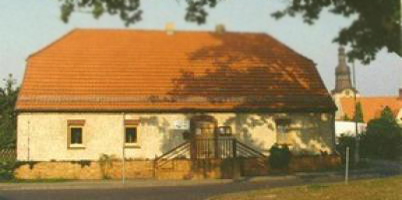
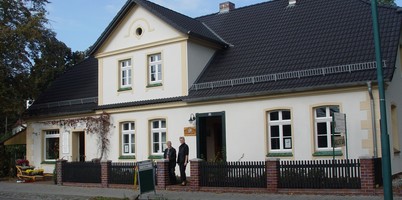
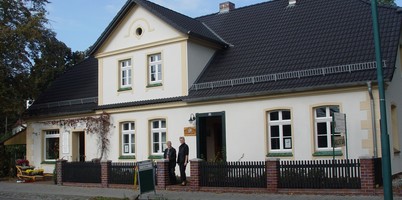
One of the oldest houses in Döbern can be found at Ringstraße 53. Built around 1800, the first Döbern inn, the "Gasthaus Krätsch", was located here. In 1877, school was held here for a short time until the first school building was completed in today's Schulstraße.
In 1984, the building was bought by the town of Döbern, which initially established the town library here. In 1993, a small local history room was established. After the book stalls were relocated to Muskauer Straße 14, renovation and refurnishing took place. The Döbern museum of local history was opened on 30 May 2014. More than 100 m² of exhibition space invite you to visit.
Characteristics
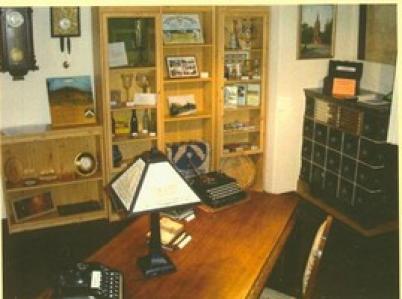
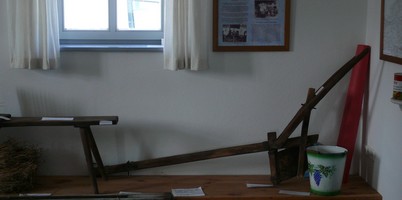
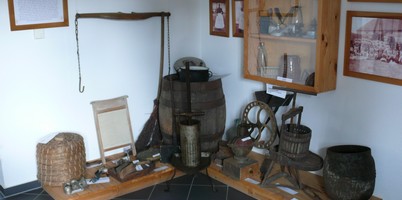
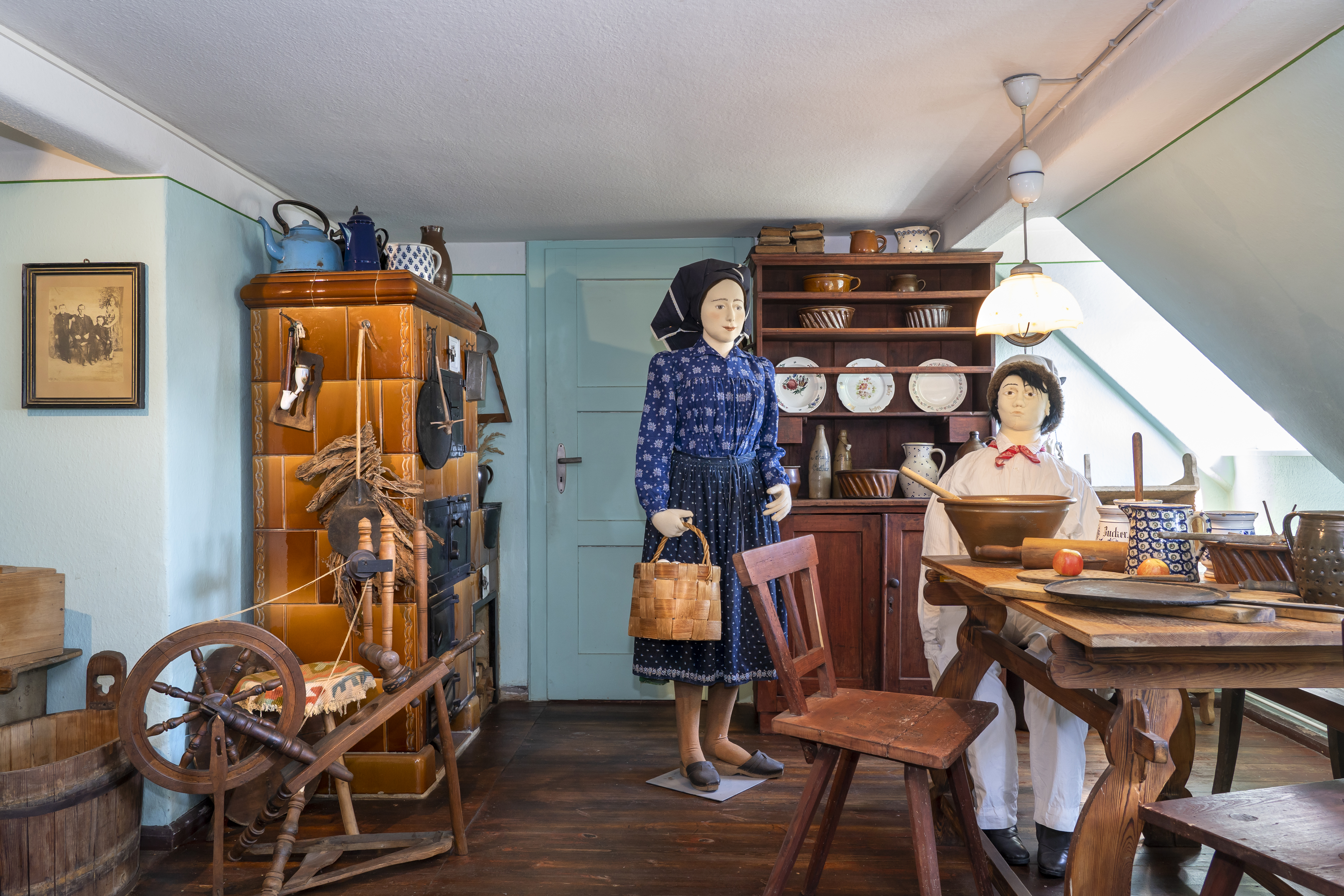
The local history museum houses testimonies to the local history of Döbern and Eichweg. The main focus is on the history of the building, trade and commerce, school and local history and a small farm kitchen. Display and photo panels on the present-day district of Eichwege, which was called Dubraucke until 1937, show that there is a much older history than that of the former village of Döbern. In another room, the club life of Döbern and Dubraucke 100 years ago is depicted. The exhibition outside includes a well with a swing pump and a miner's workshop. In the outbuilding, a laundry and summer kitchen and a glassmaker's and grinder's workshop invite visitors to look around.
Special exhibitions / accompanying offers
Every year, a series of lectures takes place in which interesting facts about the history of the village are conveyed. Articles on history can also be read in the "Döbern Kultur- und Heimatblatt". A special exhibition on scales and weights was opened in June 2016.
Special exhibitions are held 1-3 times a year on specific municipal occasions and highlights (anniversary of the kindergarten, waterworks, fire brigade, Catholic Church, development of the suburban settlement). They are realised on the principle of mobile display boards and are mainly produced by the association.
Offers for children - With Kobi to the museum
Kobi - the little house ghost - is at home in the museum. He lives there in a slipper under the stove. At midnight, he eavesdrops on the old museum pieces when they tell stories about the past. He tells these exciting stories to the museum staff, who then pass them on to the children - stories from the old, old days.
Kobi offers:
Evidence of the local history of Döbern
The "Heimatmuseum Döbern" is located in the building and on the grounds of the historic "Alte Schänke". It houses evidence of the local history of Döbern. The main focus is on glass production, the history of mining as a district history and the domestic economy of the rural proletarian population by means of changing exhibition areas.
The offer takes place indoors and is aimed at pupils in grades 1 to 10.
Dates: by arrangement
Pre-registration: 2 weeks before at the latest
Customs under the reed roof - Spreewald history at the harbour
Building / plot situation
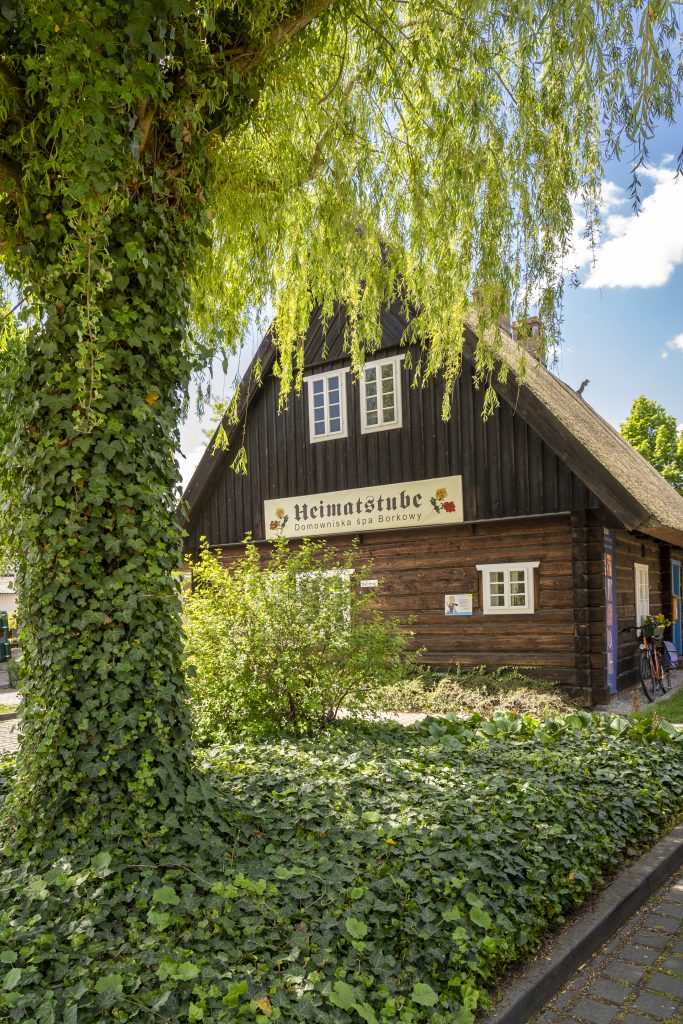
Die „Heimatstube Burg“ befindet sich in einem Gebäude am Spreehafen, das zu einem nach historischen Vorbildern gestalteten Drei-Seiten-Hof mit Ziehbrunnen, Wirtschaftsgebäude und Scheune mit Galerie gehört. Das Haus ist ein umgesetztes, historisches Bauernhaus in Blockbohlenbauweise mit der für diese Bauweise typischen Dreigliederung des Grundrisses. Es stammt aus dem Ortsteil Burg-Kauper und war bis etwa 1990 bewohnt.
Characteristics
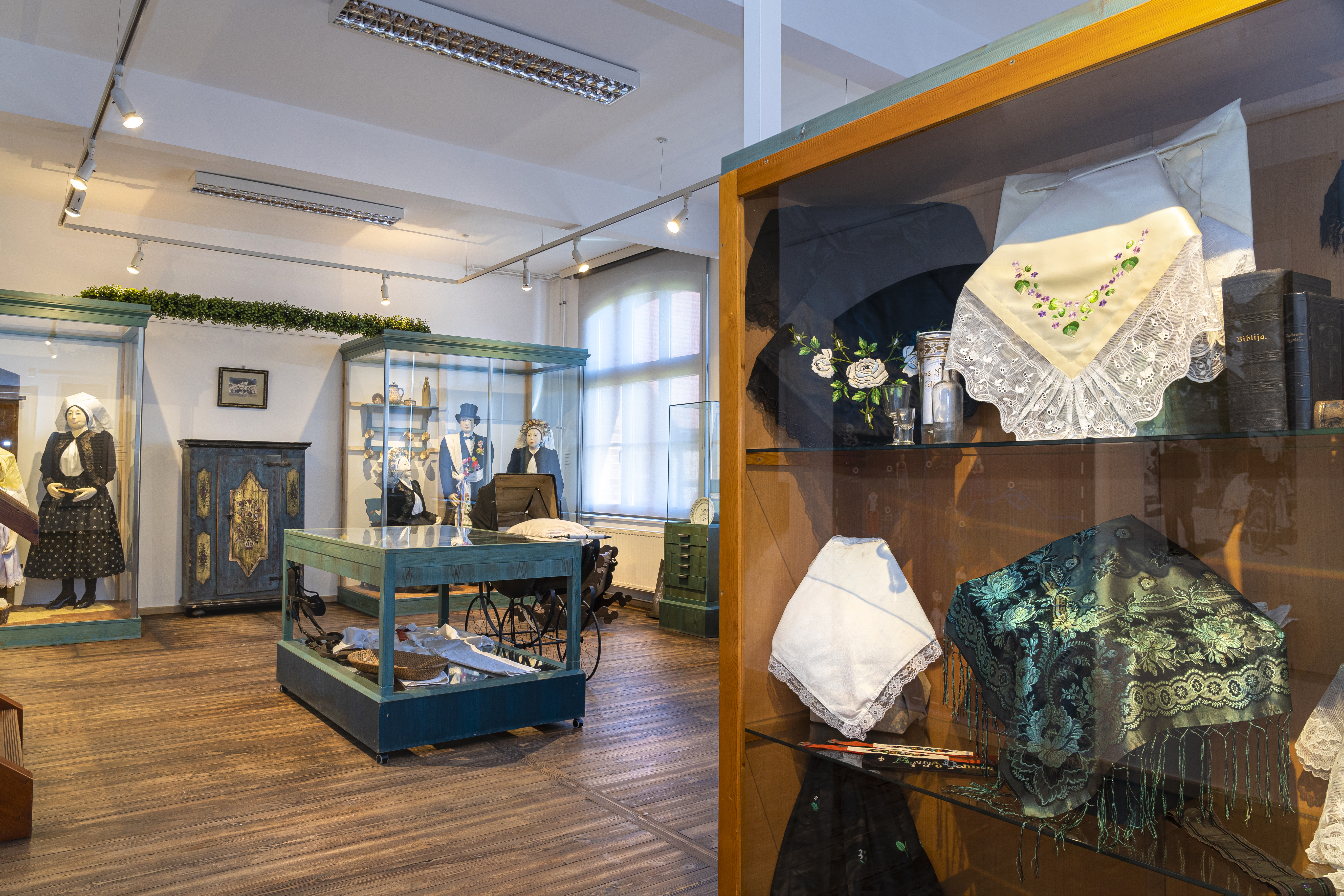
Die Ausstellung gewährt Einblicke in die Geschichte und Gegenwart des Ortes Burg (Spreewald) und die Lebenswelt der sorbischen/wendischen Bauern in Burg und Umgebung bzw. im Spreewald vom 18. bis ins 21. Jahrhundert. Schwerpunkte sind die Präsentation der aufwendigen Burger Trachten, die Darstellung des traditionellen Handwerks und die Lebensgeschichten einiger bekannter Burger Persönlichkeiten.
Accompanying offers
im Haus der Begegnung, Am Bahndamm 12b in Burg (Spreewald):
"Getting to know legendary figures and their meaning" Knowledge about the language, culture and way of life of the Sorbs/Wends is imparted with the possibility of dressing up.
Show demonstration "Sorbian Easter egg painting in wax reserve and bossing technique".
Allgemeine Führung zum Thema Sprache, Kleidung und Bräuche
Thematische Führungen, bei denen ein Aspekt der Ausstellung ausführlich vertieft wird (z.B. Osterbräuche, Flachsverarbeitung, Tracht und Kleidung, Sagengestalten)
Wanderungen mit dem Irrlicht (Błudnik) zu geheimnisvollen Orten im Ortskern
Offers for children - With Kobi to the museum
Kobi - the little house ghost - is at home in the museum. He lives there in a slipper under the stove. At midnight, he eavesdrops on the old museum pieces when they tell stories about the past. He tells these exciting stories to the museum staff, who then pass them on to the children - stories from the old, old days.
Kobi offers:
1. fabulous voyage of discovery
During a dice game with legendary figures as game pieces, our "young" guests learn a lot of interesting facts about the legendary figures. It is a regional hike from Vetschau via Raddusch, Lehde, Straupitz, Cottbus, Briesen to Burg. With knowledge, you can get ahead faster in the game. In addition, there is a lot of interesting information about our region.
Unusual game rules and special accessories make the game varied. For example, you can choose between a mathematical, a sporty and a healthy game variant.
The offer takes place indoors and is aimed at schoolchildren.
der Klassen 1 bis 12, ist aber auch für Erwachsene geeignet.
Dates: by arrangement
Pre-registration: at least 1 week in advance
Duration: approx. 30 to 60 minutes (depending on the number of players)
Group size: 2 to 10 people
Preis: 40,00 € pro Gruppe
1. Teil: Kurze allgemeine Führung mit Informationen zum Dorf Burg (Spreewald), zur niedersorbischen/wendischen Sprache und zu den niedersorbischen/wendischen Trachten.
Part 2: Some children are transformed into legendary figures with costumes. With the help of these, they learn interesting facts about the living conditions of our ancestors, whereby the children's knowledge is included but not required. For example, the importance of water in general, the water conditions in the Spreewald and the Lower Sorbian/Wendish language are discussed.
Part 3: Depending on the children's stamina and interest, two to three more sagas are read aloud and briefly discussed.
The offer takes place indoors and is aimed at schoolchildren.
of classes 1 to 6.
Dates: by arrangement
Pre-registration: at least 1 week in advance
Duration: approx. 1.5 hours (depending on the children's stamina)
Group size: up to 25 people
Admission per person: € 2.00
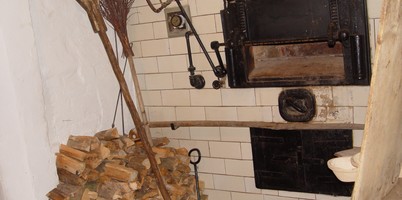
The lovingly furnished museum is located in a former village bakery. The building structure of the farmhouse, which was built massively in traditional style in the late 19th century, is remarkable. The gable of the previous building is preserved on the floor. The functioning old baking oven is the most important object in the museum. At museum festivals, visitors can see for themselves the quality of the baked products.
Characteristics
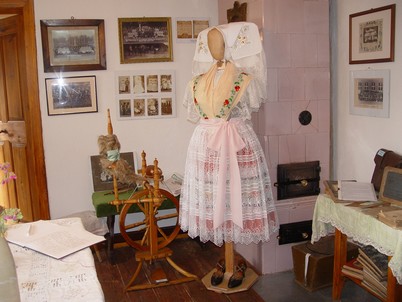
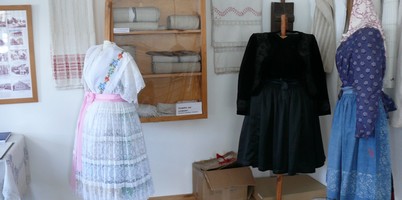
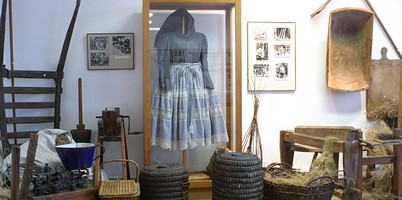
The local history museum was opened on 12 November 2005. It houses exhibits and displays on the life of the rural population, Sorbian/Wendish customs and details of life from the 18th century onwards in an original atmosphere. A permanent exhibition on the Sorbian/Wendish history of the village can be visited. The Lower Sorbian traditional costumes are a special attraction, from peasant working costumes to elaborately embroidered festive costumes. The Fryco-Rocha cabinet with its historical classroom tells about the Wendish teacher, writer and folk poet who was born in the Schönhöhe district. The exhibition refers to Fryco Rocha's work as a teacher in Tauer from 1891 to 1915, which he performed in Lower Sorbian despite being forbidden to do so. He wrote about 300 Lower Sorbian stories and songs for use in the classroom. He is therefore considered the first Lower Sorbian children's poet.
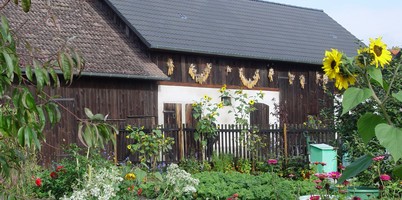
The unadulterated farm with its farm buildings and a traditional farm and herb garden has an idyllic effect.
Special exhibitions / accompanying offers
The farm is located directly next to the cycle path to the Großsee - direction Pinnower See - Schlaubetal.
A typical farm garden with an insect hotel was created next to the farm.
Offers for children - With Kobi to the museum
Kobi - the little house ghost - is at home in the museum. There he lives in the slipper under the stove. At midnight he eavesdrops on the old museum pieces when they tell stories about the past. He tells these exciting stories to the museum staff, who then tell them to the children - stories from the old, old days.
Kobi offers:
Baking oven, customs and typical farm garden
The lovingly furnished museum is located in a former village bakery. It houses exhibits and displays on the life of the rural population, Sorbian/Wendish customs and details of life from the 18th century onwards in an original atmosphere. The Lower Sorbian traditional costumes are a special attraction, ranging from peasant working costumes to elaborately embroidered festive costumes. The unadulterated courtyard with its farm buildings and a traditional farmer's and herb garden have an idyllic effect.
The offer takes place indoors and is aimed at pupils in grades 1 to 10.
Dates: by arrangement
Pre-registration: 2 weeks before at the latest
Admission per person: € 0.50
Heimatstube - from the dragon saga to the spinning room
Building / plot situation
The three lovingly furnished exhibition rooms are located in the community cultural centre of the municipality of Drachhausen, a former inn.
Characteristics
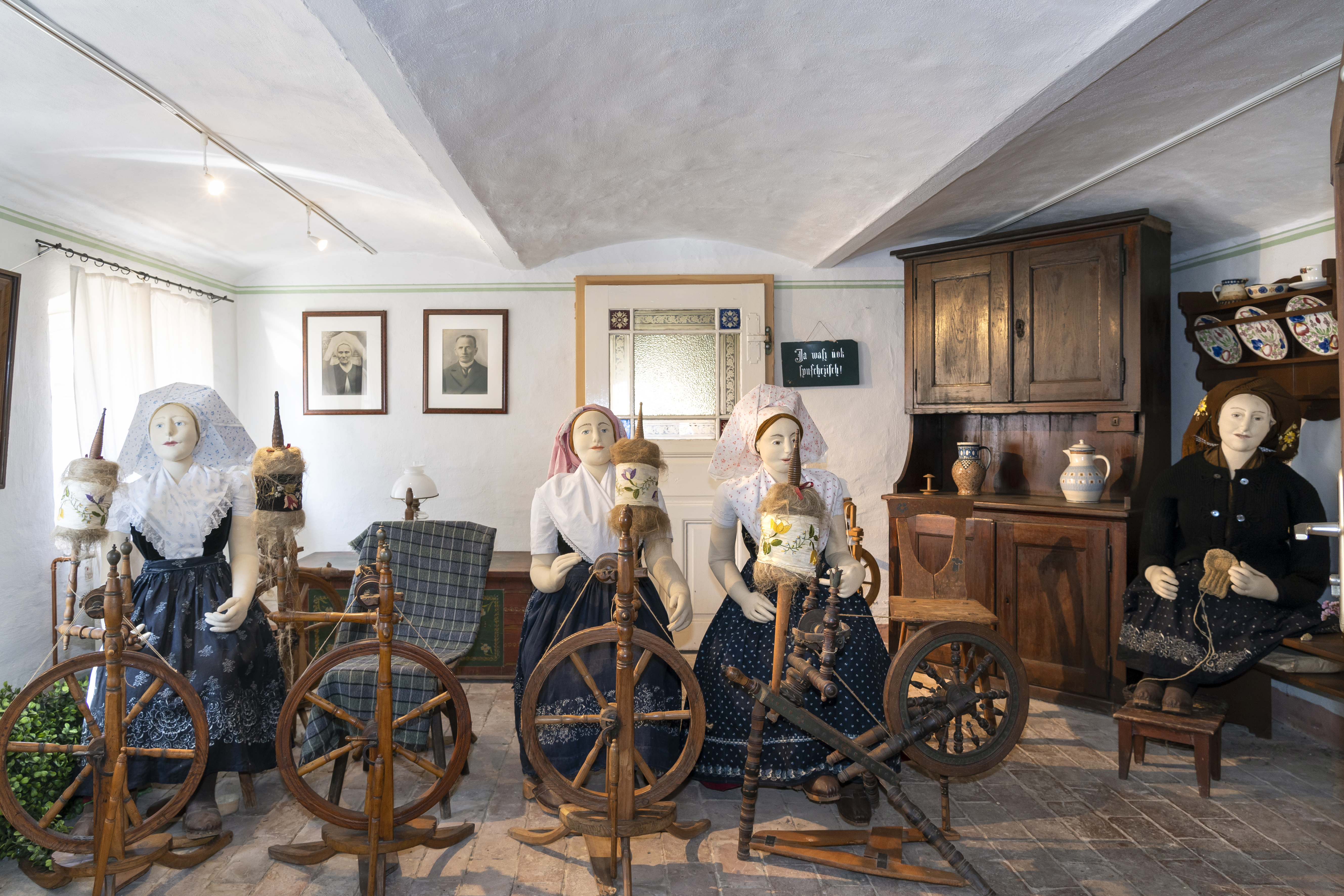
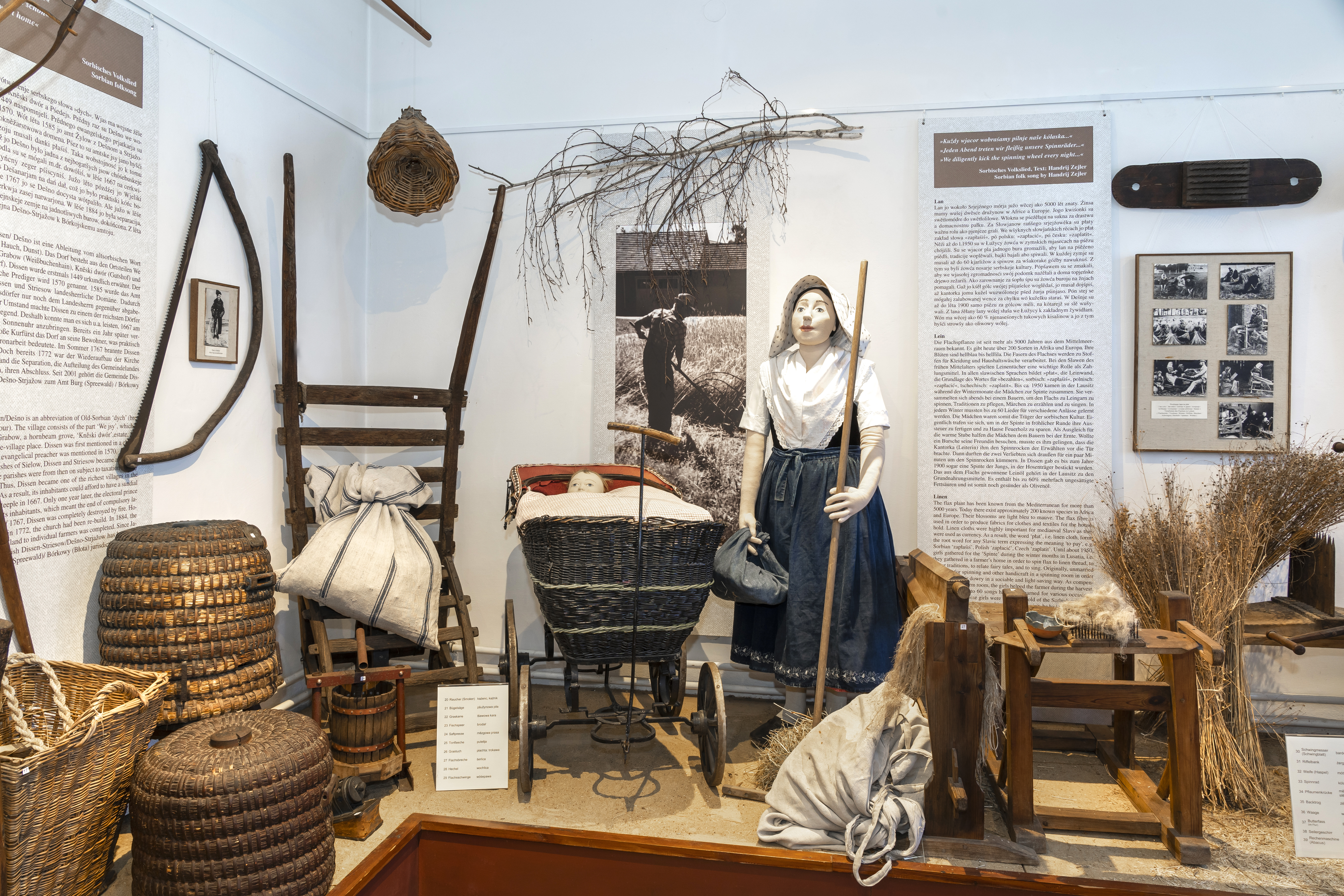
The small facility houses exhibits on the life of the rural population, especially on the tradition of flax processing from the area around Drachhausen.
"Kólasko" means "spinning wheel" in German. This is one of the tools used to make linen. In the old days, the women of the village met in the "spinte" to work together on the spinning wheel. Many a story was also "spun" on these wintry evenings. The legend of the dragon that lived in the area was always at the centre of the village history.
Special exhibitions / accompanying offers
Are not planned at present.
Annual participation in the Museum Night of the Spree-Neiße district
Offers for children - With Kobi to the museum
Kobi - the little house ghost - is at home in the museum. He lives there in a slipper under the stove. At midnight, he eavesdrops on the old museum pieces when they tell stories about the past. He tells these exciting stories to the museum staff, who then pass them on to the children - stories from the old, old days.
Kobi offers:
Flax and linen
The small facility houses exhibits on the life of the rural population, especially on the tradition of flax processing from the area around Drachhausen. "Kólasko" means "spinning wheel" in German. This is one of the tools used for the production of linen. In the old days, the women of the village met in the "spinte" to work together on the spinning wheel. Many a story was also "spun" on these wintry evenings.
The offer takes place indoors and is aimed at pupils in grades 1 to 10.
Appointments: Monday to Friday from 9 a.m. to 12 p.m. by arrangement
Pre-registration: 1 week before at the latest
Duration: approx. 1 hour
The local history museum is located in the building and on the grounds of the former Dissen school. The complex is a listed building. The fabric of all buildings underwent a complete reconstruction in 1999 / 2000.
Characteristics
The exhibition provides insights into the way of life of the Sorbian / Wendish farmers in the Lower Lusatian region between Cottbus and Burg in the 19th to the 1960s. The exhibition reports on the hard work in the fields and stables, living on the farm, the life of children, Sorbian fairy tales and legends, festivals, celebrations and the many customs that are still alive today. The documentation of Bogumil Šwjela's work is a focal point. A special quality is the collection of Lower Sorbian traditional costumes, which make up about half of the collection. From everyday rural costumes to elaborately embroidered bridesmaids' costumes and other festive costumes, over 20 variations and individual pieces from the 18th century are on display.
Special exhibitions / accompanying offers
Regular special exhibitions (approx. 3 per year) are related to the permanent exhibition, i.e. concerning the place, customs, fairy tales and legends, seasonal events, way of life and, in addition, art exhibitions concerning the landscape and the place as well as natural history exhibitions in the "Storchenhof Dissen".
The guided tours are offered in German and, by prior arrangement, in Sorbian, English and Czech.
Museum educational offers for schools
Museum Night, Artists' Market
Guided tours in the church
Actions for the annual village festival
Events such as book presentations
in cooperation with the Dissen Church Song programmes and concerts
Guided tours for the visually impaired and people with intellectual disabilities
Offers for children - With Kobi to the museum
Kobi - the little house ghost - is at home in the museum. He lives there in a slipper under the stove. At midnight, he eavesdrops on the old museum pieces when they tell stories about the past. He tells these exciting stories to the museum staff, who then pass them on to the children - stories from the old, old days.
Kobi offers:
1. "Stary Lud - the encounter with the ancient people" - a journey back in time to the 10th/11th century
" Stary lud - The encounter with the ancient people" - a Slavic journey through time to the 10th/11th century. Introduction to the early settlement history of the Sorbs/Wends as well as their clothing in the early Middle Ages. In projects, the pupils can understand for themselves what life might have been like in the 10th/11th century.
The students choose from the 3 project offers:
1. metal crafts and making fire,
2. kitchen and nutrition
3. from sheep to clothing,
one in which they will work.
Implementation of the whole project: 10 min short introduction to Slavic history (for all pupils), 15 min introduction to the dress code of the early Middle Ages (small demonstration for all pupils), followed by group work in the 3 projects, conclusion common meal for all pupils with ingredients of the Middle Ages.
The programme takes place outdoors and is aimed at pupils in grades 3 to 12.
Please make sure to wear appropriate clothing!
Dates: by arrangement
Pre-registration: at least 3 weeks in advance
Duration: 4 lessons + 30 minutes snack
Group size: 6 to 20 people
On a guided tour of the museum, the pupils learn about the history of the Sorbs/Wends from settlement to the present day. Stories are told about the hard work in the fields and on the farm, but also about festivals and customs. These tours are designed according to the age group.
The programme takes place outdoors and is aimed at students in grades 1 to 12.
Please make sure to wear appropriate clothing!
Dates: anytime by arrangement
Pre-registration: possible at short notice
Duration: 45 minutes per project stone
Group size: 6 to 30 people
Different offers can be combined with each other by arrangement.
In this LER project, Bernd Pittkunings, as a trained catechist, guides the pupils through the beautifully decorated Dissen church. The pupils learn about all the church holidays by looking at the painted galleries and can ask their questions about church and worship.
The offer takes place indoors and is aimed at pre-school children and pupils up to grade 7.
Dates: by arrangement
Pre-registration: at least 2 weeks in advance
Duration: 45 minutes
Group size: 6 to 30 people
Other offers of the museum of local history can be used by arrangement.
4th Stork Summer or "Where are the storks in winter?"- Natural History Tour
In a guided tour of the stork, the pupils learn many interesting facts about this rare species. A camera shows the museum's stork couple raising their young. A short film and the stork exhibition complement the knowledge. In a small quiz, the pupils can test their newly acquired knowledge about Master Adebar.
In winter, this nature project provides information about hibernation, migratory birds and winter torpor. It also shows other ways in which animals can survive the harsh winter.
The programme takes place indoors and outdoors and is aimed at students in grades 1 to 12.
Dates: by arrangement April to end of July or all year round
Pre-registration: yes
Duration: 45 to 90 minutes
Group size: 6 to 20 people
By arrangement, various offers of the local history museum can be combined with each other.
5. outline of contemporary Sorbian music and literature - diversity of Sorbian music, creative poets and literary figures
Many people perceive nothing of Sorbian music or only its folklore elements. But contemporary Sorbian music is not limited to choirs singing folk songs or to pop songs on the radio.
It ranges from chanson, pop, rap and heavy metal in its many forms of expression to experimental new music. Equally creative are the more or less well-known Sorbian poets and writers. The Sorbian song poet Bernd Pittkunings provides an overview.
The offer takes place indoors and is aimed at
Students from grades 7 to 12.
Dates: by long-term arrangement
Pre-registration: 4 weeks before at the latest
Duration: 45 minutes per project module
Group size: 6 to 30 people
By arrangement, various offers of the local history museum can be combined with each other. (Fees will be charged accordingly).
6. listen - join in! - Songs to listen to, sing along and participate in
Songs to listen to, sing along and join in: Why the dragon doesn't fetch the princess, animals in the fire pond, a young man in love, dreams of Africa and the holidays are sung about in songs by the song poet Pittkunings.
The offer takes place indoors and is aimed at pre-school children up to grade 4.
Dates: by arrangement
Pre-registration: 2 weeks before at the latest
Group size: 6 to 30 people
By arrangement, various offers of the local history museum can be combined with each other.
7. eating and drinking keeps body and soul together - about eating and drinking, stockpiling and meal order
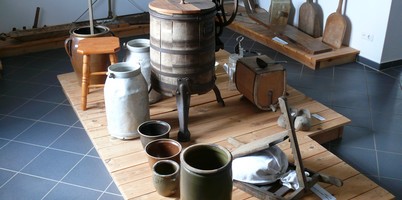
The children are given a guided tour of the museum on the topic of "Nutrition in earlier times". They learn about dishes and food sequences at festivals and can make butter and herb curd themselves. The children collect herbs and process them into herb curd. They are allowed to churn their own butter and eat it with fresh bread.
The programme takes place indoors and outdoors and is aimed at pre-school children up to grade 12.
Dates: by arrangement
Pre-registration: 2 weeks before at the latest
Group size: 6 to 30 people
By arrangement, various offers of the local history museum can be combined with each other.
8. stories around the sweet porridge - cooking and telling fairy tales in the museum
"Once upon a time in Africa... The guenons had planted beans and wanted to harvest them to cook themselves a porridge. But ..." Would you like to know what happens next? Then visit us at the Dissen Museum of Local History and let's dive into fairy tales from all over the world that are all about food. We will cook a sweet porridge together, and while the millet is simmering on the cooker, Bernd Pittkunings will tell stories and fairy tales about food from the past and present.
The offer takes place indoors and is aimed at pre-school children up to grade 7.
Dates: by arrangement Monday to Friday
Pre-registration: 2 weeks before at the latest
Duration: 1.5 to 2 hours
Group size: 6 to 30 people
By arrangement, various offers of the local history museum can be combined with each other.
Each pupil can beautifully decorate their own Easter eggs with Sorbian motifs using the wax reserve technique and learn interesting facts about the symbolism of the patterns.
These working materials must be brought along:
Hard-boiled or blown-out eggs
The offer takes place indoors and is aimed at pre-school children up to grade 7.
Dates: 4 weeks before Easter by arrangement
Pre-registration: 4 weeks before at the latest
Duration: approx. 1.5 hours
Group size: 6 to 30 people
By arrangement, various offers of the local history museum can be combined with each other.
10. ceramic pendants for Easter and Christmas - clay work
Patterns are pressed into prepared Easter tags or poinsettias in damp clay. These are later fired and make beautiful gifts or decorative pieces for a spring or Christmas bouquet.
The offer takes place indoors and is aimed at students in grades 1 to 12.
Dates: by arrangement
Pre-registration: 2 weeks before at the latest
Group size: 6 to 30 people
By arrangement, various offers of the local history museum can be combined with each other.
11. baked apple time - baked apple and fairy tales in the museum
The museum's autumn and Christmas offer: children's laughter will be heard again because it's baked apple time. The children fill their own apple with nuts, homemade jam and sultanas. While the apple then roasts in the oven for 40 minutes, Bernd Pittkunings tells fairy tales and sings songs about food. Afterwards, the children can finally taste what a baked apple tastes like.
The offer takes place indoors and is aimed at pre-school children up to grade 7.
Dates: October to February by arrangement Monday to Friday
Pre-registration: 2 weeks before at the latest
Group size: 6 to 30 people
By arrangement, various offers of the local history museum can be combined with each other.
Those who want to make their own completely durable poinsettias or hearts can press their own patterns in moist clay in a separate event. These are later fired and each child receives their own beautiful stars or hearts for the Christmas tree after a week.
The offer takes place indoors and is aimed at pre-school children up to grade 12.
Dates: October to December from Monday to Friday by arrangement
Pre-registration: 2 weeks before at the latest
Duration: approx. 1 hour
Group size: 6 to 30 people
By arrangement, various offers of the local history museum can be combined with each other.
13. snowflake stars - Snĕžynka - crafts and storytelling in the museum
The pre-Christmas season is also mysterious and mystical. Because there is so little snow, the children can use scissors and paper to create their own beautiful snowflake stars for the window or for Christmas cards. After the busy cutting and gluing, the Sorbian snowflake "Snĕžynka", played by Bernd Pittkunings, seduces all the children into the world of fairy tales and legends.
The offer takes place indoors and is aimed at pre-school children up to grade 7.
Dates: October to January by arrangement Monday to Friday
Pre-registration: 2 weeks before at the latest
Duration: approx. 1.5 hours
Group size: 6 to 30 people
By arrangement, various offers of the local history museum can be combined with each other.
Art painters, high-flyers and everyday village life
Building / plot situation
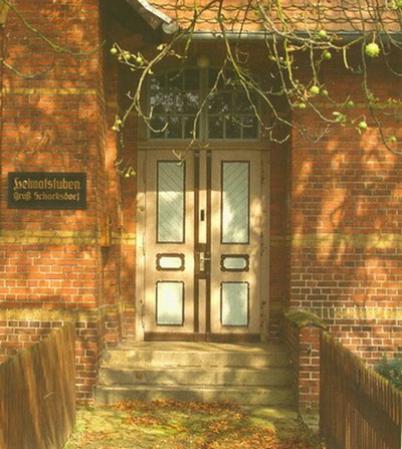
The Heimatstube, a two-storey brick building, is located in the rooms of the school building inaugurated in 1907.In 1994, the municipality made several rooms available to the association for the establishment of a Heimatstube.
Characteristics
The presentation is essentially divided into three thematic areas:
Representation of the culture and way of life of the village population from the 19th to the 20th century
The development of the village under the influence of military airfield use
The school history in Groß Schacksdorf
The name Thumann is closely associated with the school history of the 19th century. The son of the first seminary-trained village teacher was probably the most famous son of the village, Professor Friedrich Paul Thumann. Born in 1834 in Groß-Tzschacksdorf and deceased in 1908 in Berlin, he was one of the most popular painters of his time and was himself a teacher in the village for several years.
Other local personalities were Christoph Gabriel Fabricius (1684 to 1757), author of Sorbian theological treatises, and Paul Vogel, who wrote a textbook on the practice of pond management, land lake and stream fishing and lived in the castle from 1920 to the early 1930s.
Special exhibitions / accompanying offers
Special exhibitions in the classical sense do not take place, but once a year there is an exhibition outside the house on the occasion of the village festival in the sportsmen's home.
Thematic tours for school classes and travel groups
by appointment: themed or seasonal handicrafts with children
Near Klinge, 12 km east of Cottbus, the Cottbus Museum of Nature and Environment has been conducting a geological-palaeontological excavation in Eemian-Warm Pleistocene lake deposits since 1985.
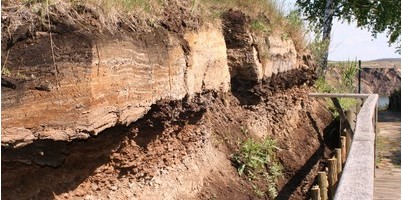
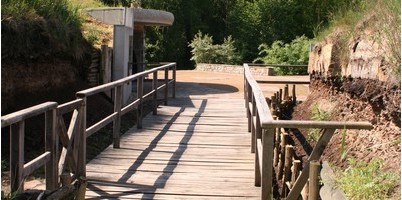
The outcrop is located between a former clay pit and the southern slope of the Jänschwalde open pit. In a 2-3 m high, 2 m wide and 12 m long section, the stratigraphic sequence of an Eemian-Warm Period to Early Weichselian-Cold Period lake is exposed in a picture-perfect manner.
Characteristics
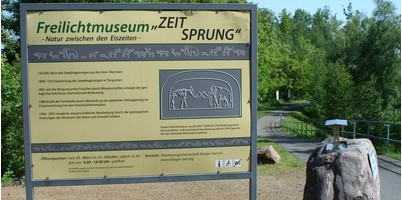
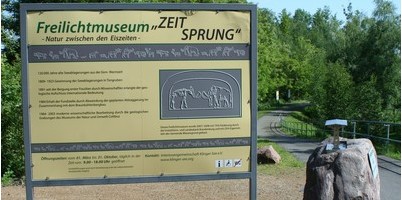
The "Zeitsprung Open-Air Museum" was opened on 17 May 2008. The municipality of Wiesengrund created this open-air museum on the site adjacent to the Eem deposit with the help of public funding. It is located in the immediate vicinity of the future Klinger Lake, which is currently being flooded. The knowledge of the importance - and thus the protection - of this Eem deposit is mainly due to the commitment of the geologists Rolf and Ursula Striegler. Their excavations brought unique insights into the geological development during the Eemian warm period.
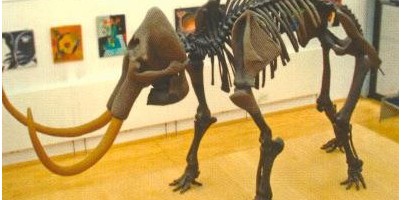
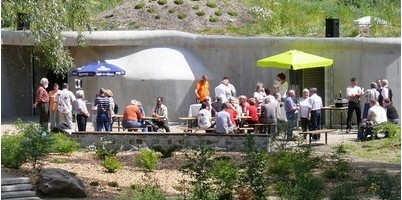
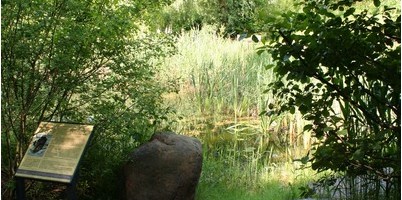
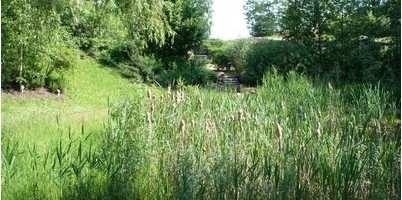
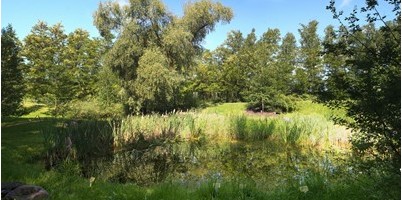
On the grounds of the museum, a wetland biotope, various display boards and a shelter building have been created, in which visitors are greeted by an original-sized replica of a woolly-haired female mammoth with her offspring in front of a recreated Eemian-Warm Period landscape. The site of the first mammoth skeleton in Germany to be found almost completely preserved was in the neighbourhood. This fossil find is preserved by the Museum für Naturkunde in Berlin. A replica true to the original can be seen in the district house in Forst (Lausitz). On an adventure trail, visitors can marvel at full-size replicas of a giant deer and a woolly rhinoceros.
The museum is run by the "Interessengemeinschaft Klinger See e.V.". The objectives of the association include:
Implementation of the design concept for the southern rim of the emerging Klinge Lake in close cooperation with the "Heimatverein Klinge e.V.".
The design and operation of the "Eem deposit Klinge" as an open-air museum "Zeitsprung".
Promotion of soft tourism along the Fürst Pückler cycle path here
Offers for children - With Kobi to the museum
Kobi - the little house ghost - is at home in the museum. He lives there in a slipper under the stove. At midnight, he eavesdrops on the old museum pieces when they tell stories about the past. He tells these exciting stories to the museum staff, who then pass them on to the children - stories from the old, old days.
Kobi offers:
Fossils up close and personal - a special kind of leap back in time to the Eemian warm period
The open-air museum shows a picture-book sequence of layers from the last two ice ages and the intervening Eemian warm period in a very special way. Many fossil animal and plant finds have made this area famous since 1891. You can experience history at first hand in the walk-through archaeological monument, along the circular path, on the adventure trail and in the dome building, and transport yourself back to the Eemian warm period about 128,000-115,000 years ago. Many information boards can be explored, and in the "Fossilium" - our excavation workshop - fossils can be searched for under guidance. Just like real geologists do, all the finds are pasted, identified and labelled on an excavation report.
Further information on the offer:
A guided tour of the open-air museum is followed by work in the "Fossilium". Depending on the size of the class, work can be done in two to three groups, see "Supplementary offers" (duration approx. 2 hrs).
The programme takes place outdoors and is aimed at students in grades 5 to 12.
Dates: by arrangement from March to October between 9 a.m. and 6 p.m.
Pre-registration: one week before at the latest
Admission per person: € 2.00
Complementary offers:
Depending on the class level, puzzle rally, casting and painting fossils, information about the formation of lignite.
Special museum with collection on the social and cultural history of the site
Building / plot situation
The building, which today houses the airfield museum, was part of the large complex of the former military property of barracks, residential buildings and "social" facilities, economic and technical buildings. The massive former workshop building was exempted from demolition and repaired.
Characteristics
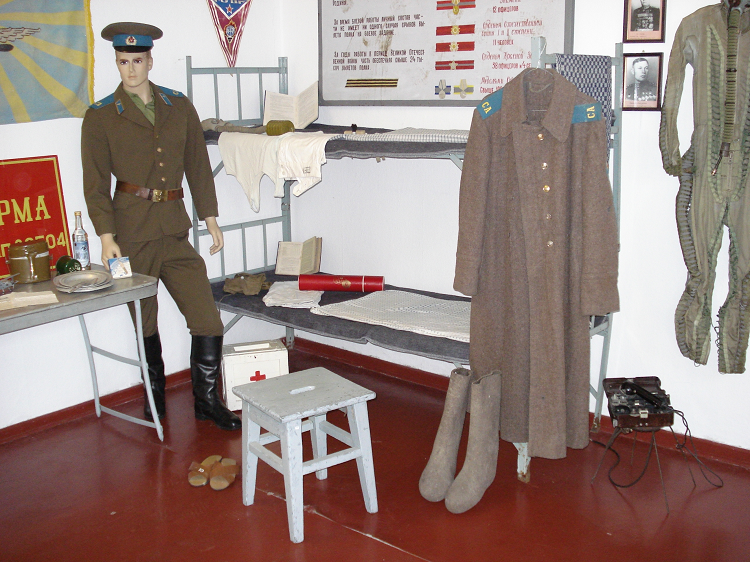
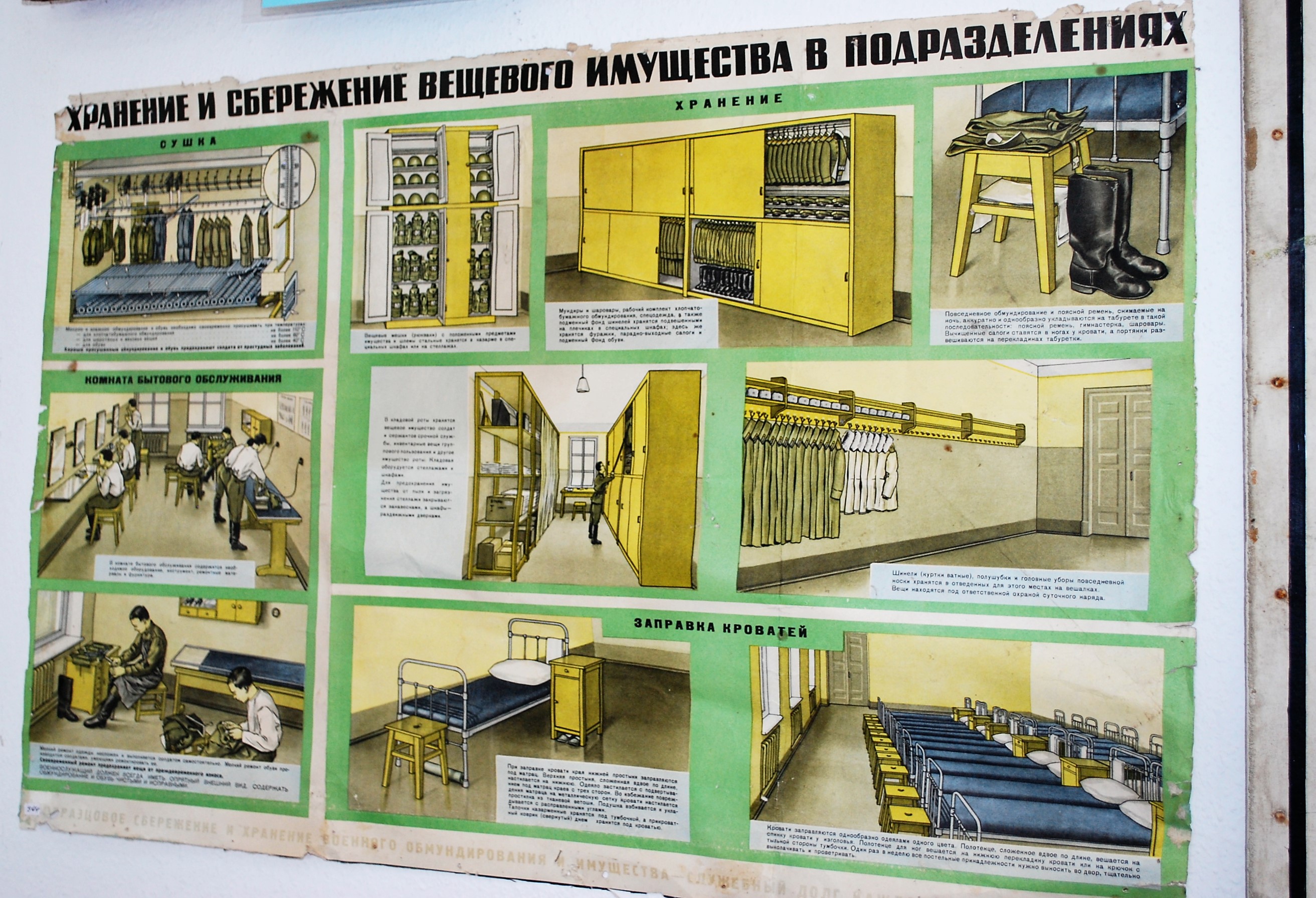
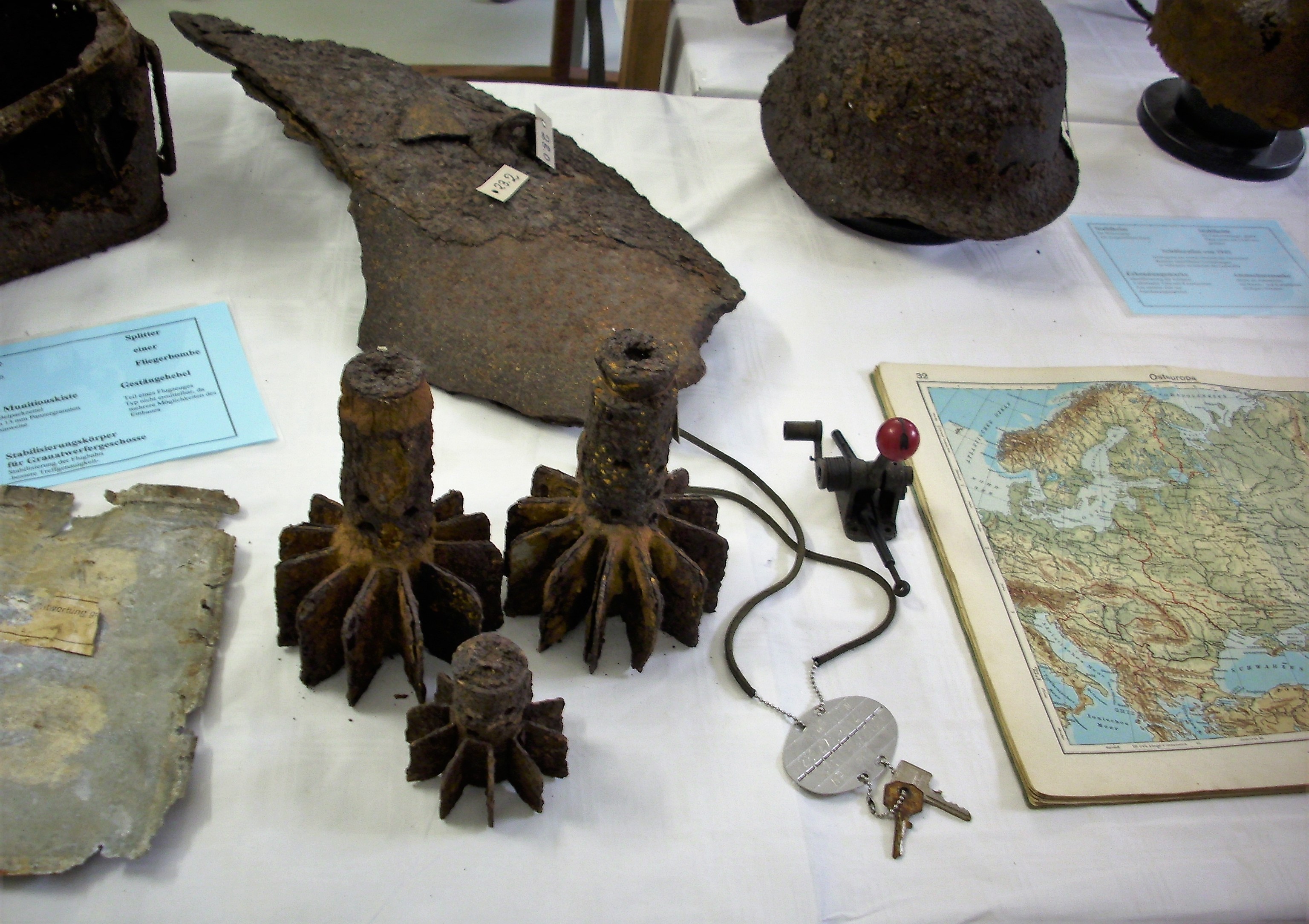
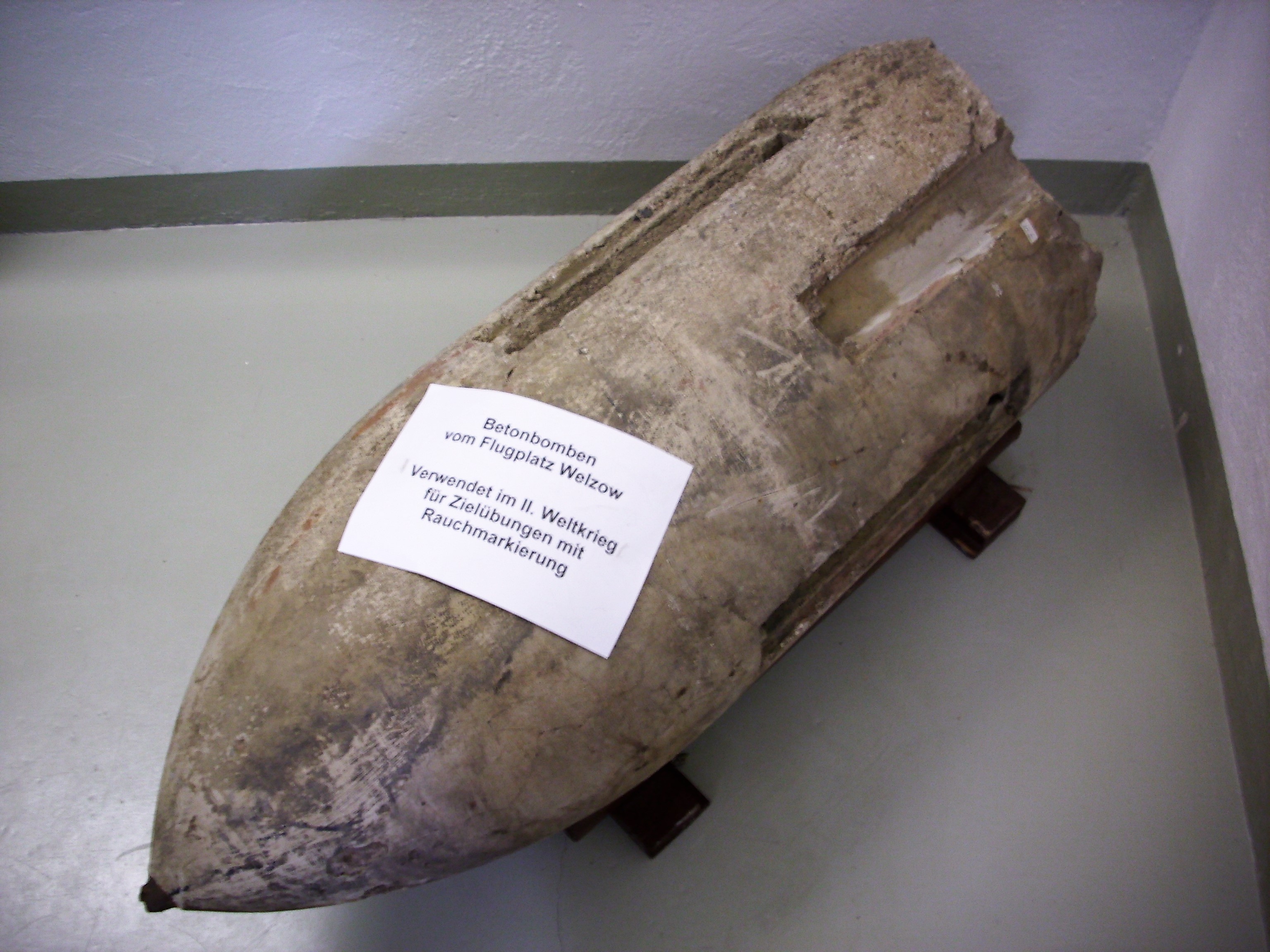
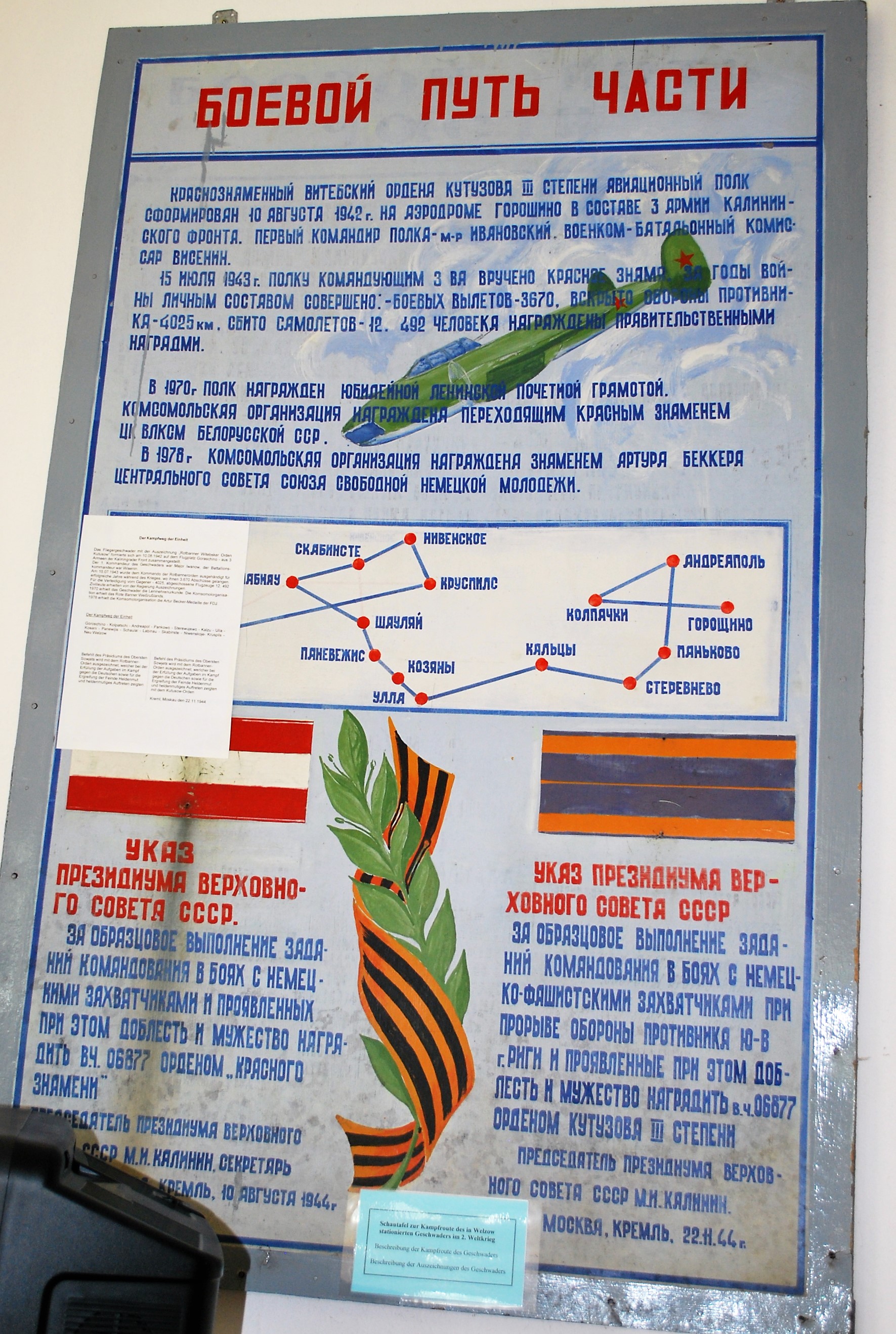
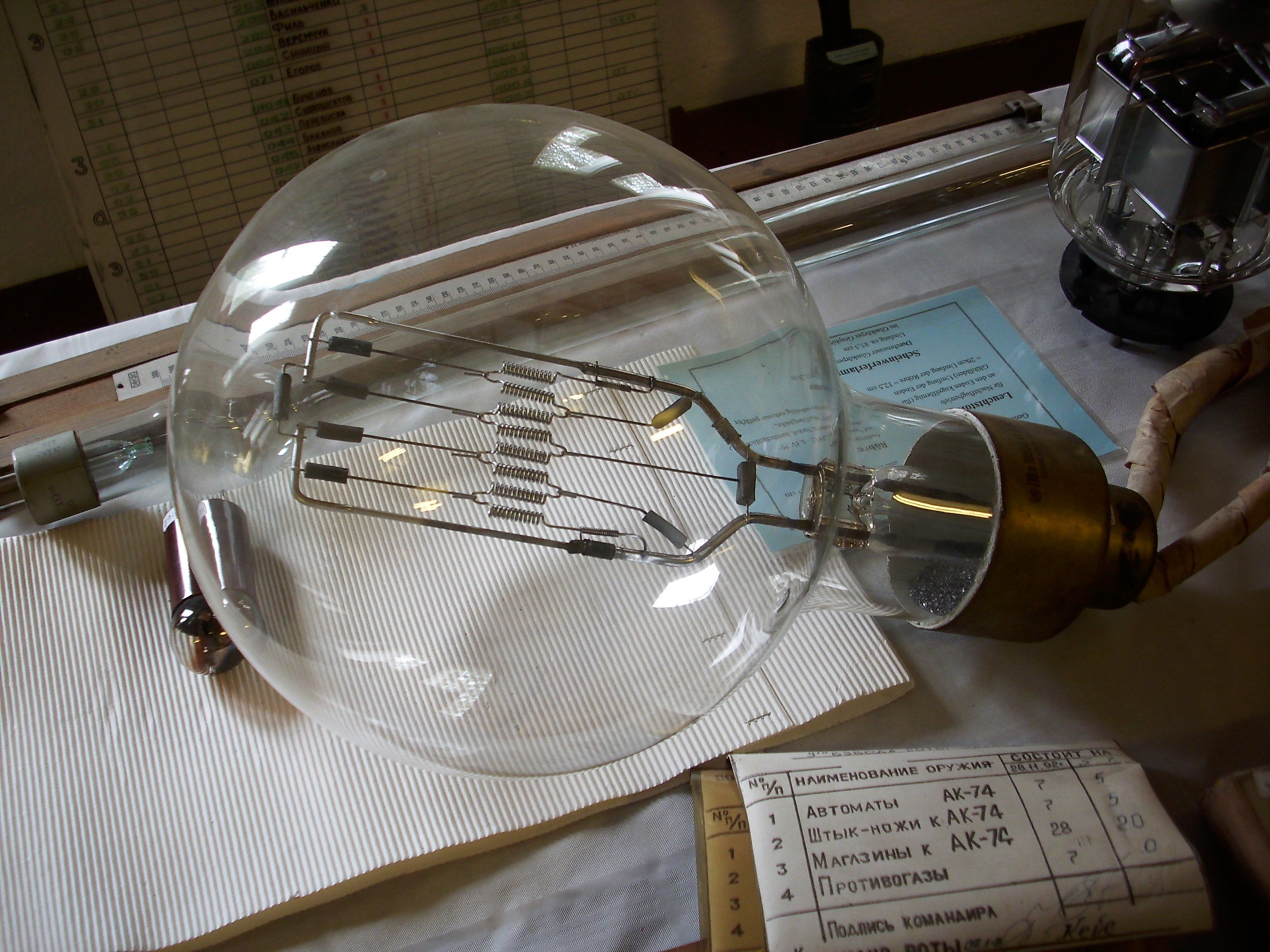
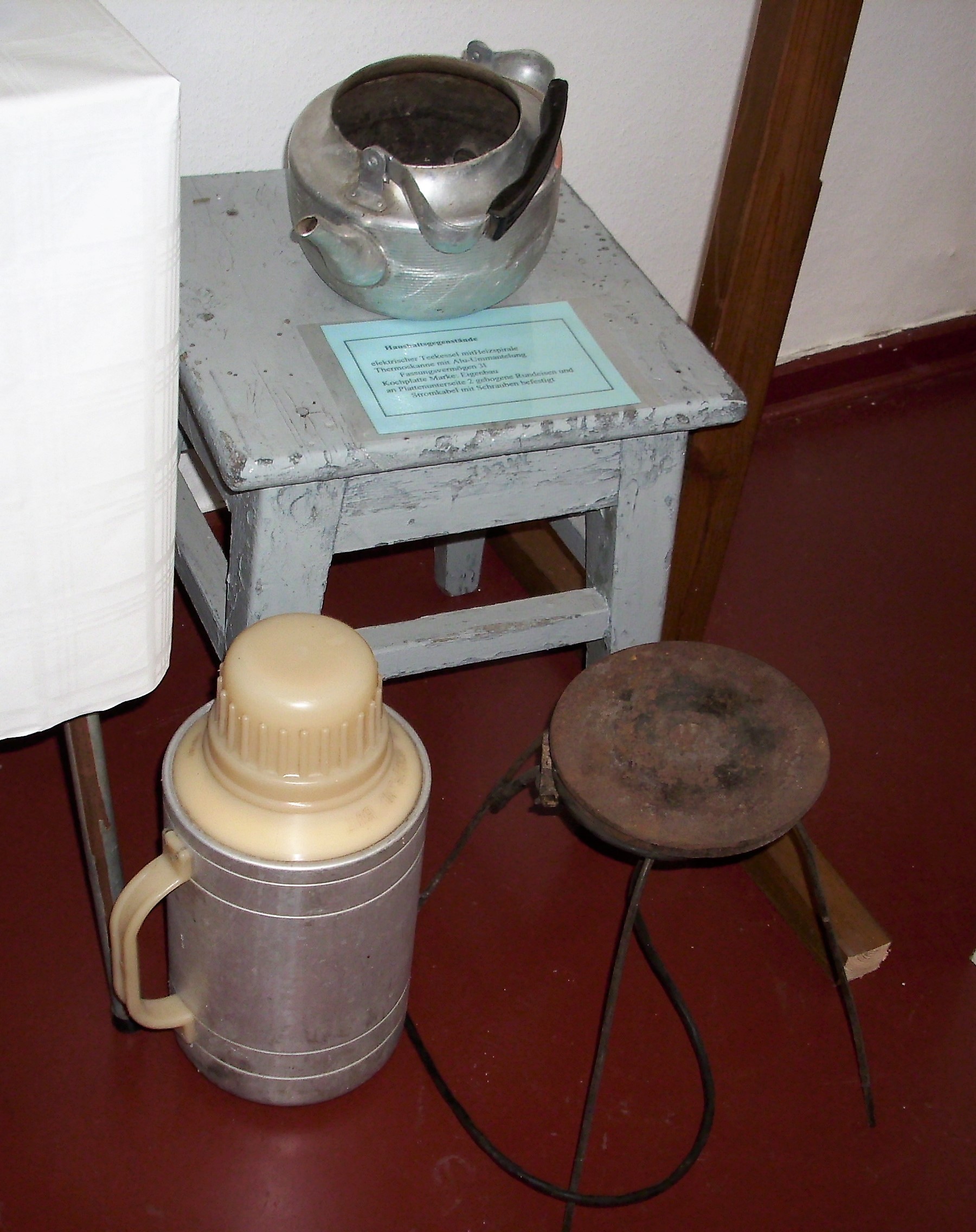
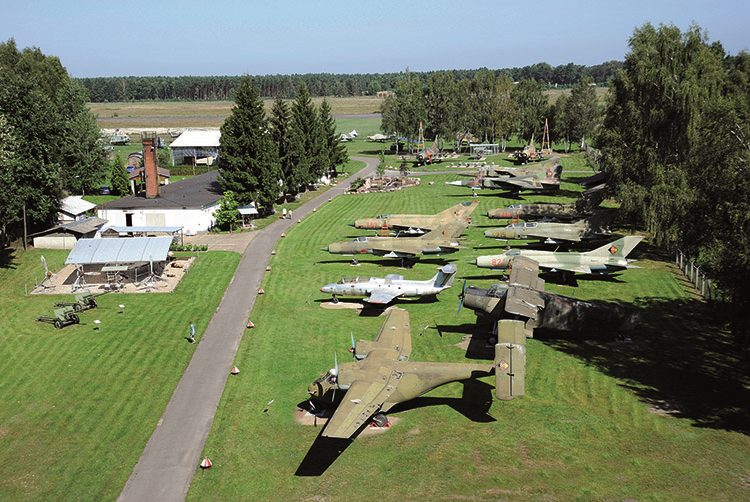
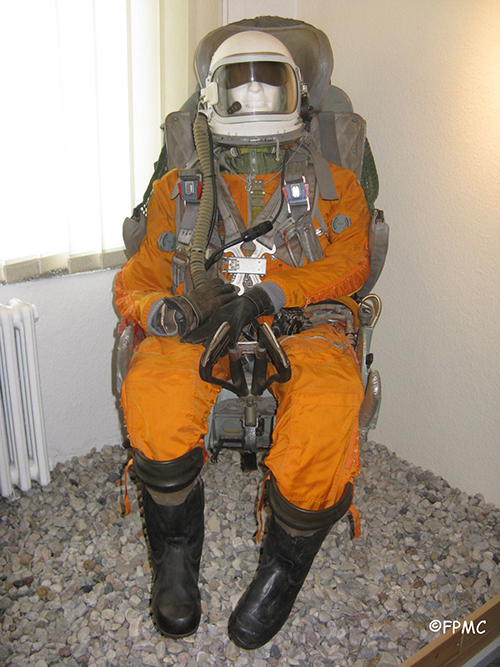
The airfield museum aims to document the history of airfield use in different eras. Hundreds of exhibits, primarily from the period of World War II and the use of the airfield by the Soviet Army, illustrate the history of Welzow Airfield from 1927 as a civil airfield, from 1935 to 1945 as a training and operational airfield for the German Wehrmacht and from 1945 as a military airfield for Soviet troops. The museum thus presents the development of the airfield in eight period and theme-related rooms, including aviation technology. Four rooms are looked after by the Flugplatzbetriebsgesellschaft Welzow mbH with a wide variety of exhibits on the use of the airfield from 1927 to 1993. Four further rooms are the responsibility of Vermisstenforschung Deutschland e.V. (Missing Persons Research Germany), which documents in particular aviation technology from the time of the Second World War. The exhibition activities are not least aimed at the interest of the local population, whose lives were shaped over a long period by the intensive use of the airfield.
Special exhibitions / accompanying offers
Special exhibitions are not currently planned.
The conceptual approach of Flugplatzbetriebsgesellschaft Welzow mbH sees the use of the Spremberg-Welzow airfield as a combination of commercial settlement, aeronautical utilisation and regional leisure activities, which include the museum and numerous clubs, festivals and gastronomy located on the site, e.g.:
Airfield Festival
Night flight action
Museum Night in the Spree-Neiße District
Bookable combination offers for groups (museum, celebration, sightseeing flight)
Cooperation with offers of the associations
Cycle path (link between the districts of Spree-Neiße and Oberspreewald-Lausitz)
Offers for children - With Kobi to the museum
Kobi - the little house ghost - is at home in the museum. He lives there in a slipper under the stove. At midnight, he eavesdrops on the old museum pieces when they tell stories about the past. He tells these exciting stories to the museum staff, who then pass them on to the children - stories from the old, old days.
Kobi offers:
Welzow airfield history
Presentation of the history of the airfield from 1927 to the present, including aviation technology. Visitors can marvel at original exhibits, primarily from the time of the Second World War and the time when the airfield was used by the Soviet Army. The entire history of the airfield can be experienced in eight period and theme-related rooms.
The offer takes place indoors and is aimed at schoolchildren.
of grades 5 to 12.
Dates: by arrangement
Pre-registration: at least 1 week in advance
Duration: approx. 2 hours
Group size: 10 to 30 people
Admission per person: € 2.00
Exhibition on the history of the site - museums between air traffic and the airfield
Building / plot situation
The museum is located in the southern part of the former Cottbus airfield and is run by the Verein Cottbus Airfield Museum e. V. operated.
Characteristics
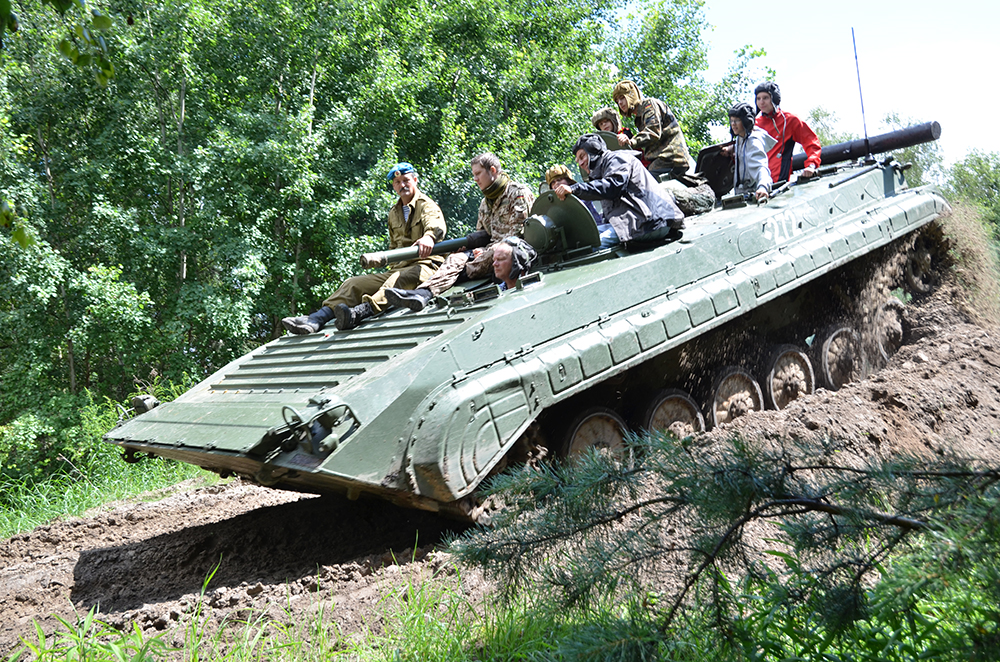
Contemporary witnesses of military flight history are exhibited on approx. 40,000 square metres of open space.
For interested visitors, there is a small exhibition on the history of the airfields in the north of the city of Cottbus. A separate exhibition shows the history of the NVA and its barracks in the city of Cottbus. Uniforms, equipment and models illustrate this part of German military history.
In addition, the visitor learns interesting facts about the aviation history of Lusatia.
Special exhibitions / accompanying offers
Utility and Military Vehicle Meeting
RC model flight meeting
Plastic Model Exhibition
Tour of the restaurant area
Offers upon request and agreement
Offers for children - With Kobi to the museum
Kobi - the little house ghost - is at home in the museum. He lives there in a slipper under the stove. At midnight, he eavesdrops on the old museum pieces when they tell stories about the past. He tells these exciting stories to the museum staff, who then pass them on to the children - stories from the old, old days.
Kobi offers:
Aviation history of Cottbus airfield
The exhibition on the history of Cottbus airfield is divided into three chronological sections (the years 1916 to 1945, 1945 to 1990 and from 1990 to the present). The airfield was used for military purposes from 1933 to 1990. In addition, the pupils learn interesting facts about the aviation history of Lusatia.
The offer takes place indoors and outdoors and is aimed at schoolchildren.
of classes 1 to 10.
Dates: by arrangement
Pre-registration: at least 2 weeks in advance
The exhibition was located in the halls of the mechanical workshop of the former briquette factory in Haidemühl until the village was relocated due to mining.
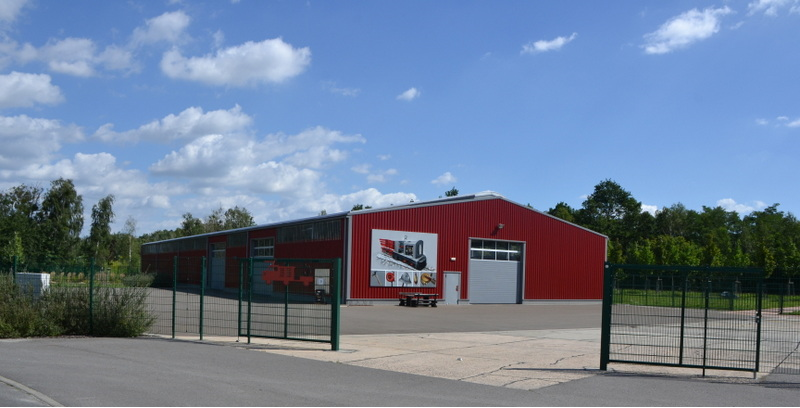
After the demolition of the site, the move to two new halls in the Welzow industrial estate has taken place. Visits to the new location are possible by appointment.
Characteristics
The Welzow Fire Brigade Park houses one of the largest fire brigade history collections in Germany and is therefore the ideal destination for technology enthusiasts. In addition to a total of 42 fire engines, 20 motorised fire engines, 12 trailer vehicles, various firefighting accessories, shoulder boards, badges of honour and equipment, all kinds of unique equipment can be admired here, including even a firefighting tank. In the Welzow Fire Brigade Museum you can go on a journey through the history of the fire brigade. The oldest piece in the collection, a hand-operated fire engine from the 1920s, dates back to the time when firefighters rushed to the scene of an incident by bicycle or on foot. In addition, there are numerous rarities and special vehicles from GDR state-owned enterprises that are unique in Germany and which have been and will be restored in detail over many hours.
Special exhibitions / accompanying offers
Special opening hours for the "Museum Night in the Spree-Neiße District
Bei der Nutzung unserer Webseite setzen wir Cookies, Server-Log-Dateien und Tools von Drittanbietern ein. Wir nehmen den Schutz Ihrer Daten ernst, daher finden Sie detaillierte Informationen in unserer >> Datenschutzerklärung <<. Wenn Sie unsere Webseite weiterhin nutzen, stimmen Sie der Nutzung Ihrer Daten zu. JA, ich stimme der Nutzung meiner Daten zu
Datenschutzhinweis
Privacy Overview
This website uses cookies to improve your experience while you navigate through the website. Out of these cookies, the cookies that are categorised as necessary are stored on your browser as they are essential for the working of basic functionalities of the website. We also use third-party cookies that help us analyze and understand how you use this website. These cookies will be stored in your browser only with your consent. You also have the option to opt-out of these cookies. But opting out of some of these cookies may have an effect on your browsing experience.




 Deutsch
  English (UK)
  Polski
  Čeština
  Serbski