Category Archives: Museen

Welzow Fire Brigade Museum (formerly Haidemühl) / Muzej wognjoweje wobory Wjelcej (něga Gózdź)

GalleryExhibitions |  Offers for childrenFwMuseum_Welzow_01_scaled

Special museum for firefighting technology

Building / plot situation

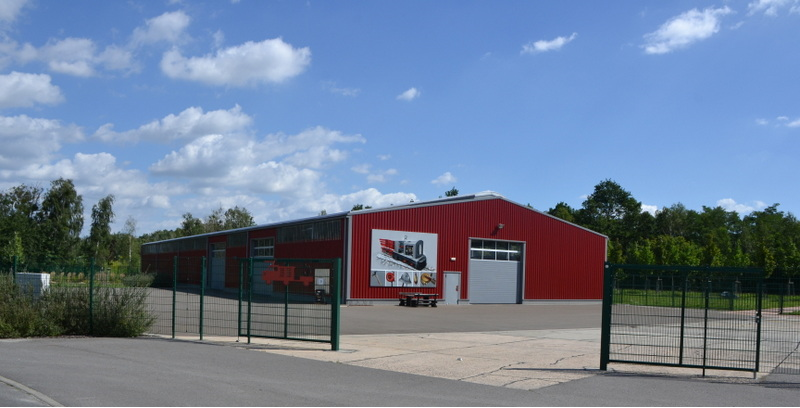
The exhibition was located in the halls of the mechanical workshop of the former briquette factory in Haidemühl until the village was relocated due to mining.
After the demolition of the site, the move to two new halls in the Welzow industrial estate has taken place. Visits to the new location are possible by appointment.

Characteristics

The Welzow Fire Brigade Park houses one of the largest fire brigade history collections in Germany and is therefore the ideal destination for technology enthusiasts. In addition to a total of 42 fire engines, 20 motorised fire engines, 12 trailer vehicles, various firefighting accessories, shoulder boards, badges of honour and equipment, all kinds of unique equipment can be admired here, including even a firefighting tank. In the Welzow Fire Brigade Museum you can go on a journey through the history of the fire brigade. The oldest piece in the collection, a hand-operated fire engine from the 1920s, dates back to the time when firefighters rushed to the scene of an incident by bicycle or on foot. In addition, there are numerous rarities and special vehicles from GDR state-owned enterprises that are unique in Germany and which have been and will be restored in detail over many hours.

Special exhibitions / accompanying offers

  • Special opening hours for the "Museum Night in the Spree-Neiße District
  • Loan of vehicles and technology.

Festungsturm Peitz / Twardnicowy torm Picnjo

GalleryExhibitions |  Offers for children 1

Museum of local history

Building and property situation

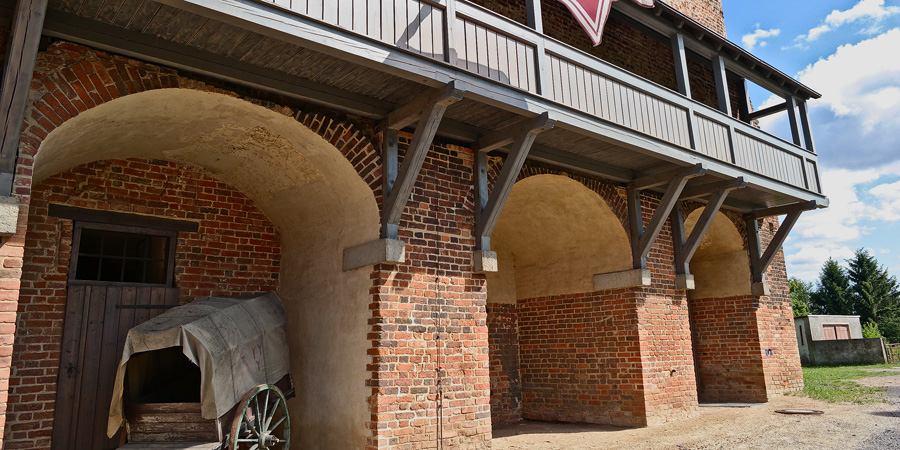
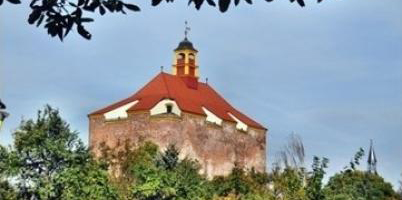
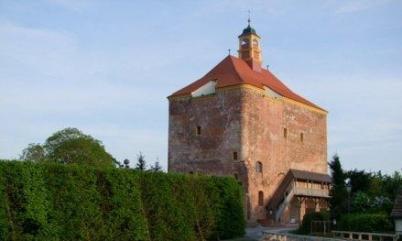
Peitz was the site of a castle dating back to the 13th century. In the middle of the 16th century, Johann V, Margrave of the Neumark, had the castle converted into a citadel (upper fortress). The reconstruction took place between 1559 and 1562. Substantial parts of the former castle can be found in the general tower of the fortress (fortress tower). Between 1590 and 1595, extensive fortifications were built around the city (Unterfestung). Renowned fortress builders of European standing such as Chiramella, Arkanat and above all Lynar were involved in the construction.
During the 30 Years' War (1618 - 1648), the fortress town offered protection to many nobles and church dignitaries. Even the Brandenburg Elector Georg Wilhelm moved his seat of government to Peitz in the winter of 1637/38.
In 1767, King Frederick the Great gave the order to demolish the fortress. Today, however, Peitz still has valuable witnesses from the fortress era. The most important building is the fortress tower from the 13th/16th century.

Characteristics

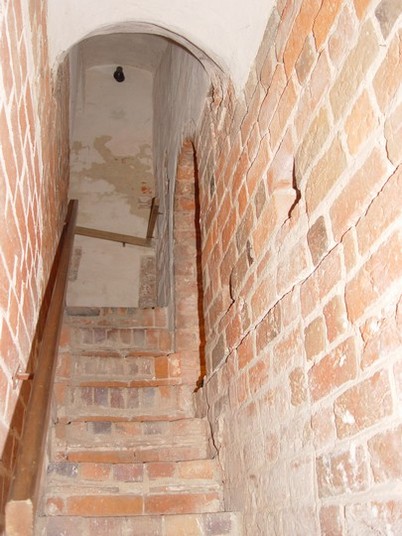
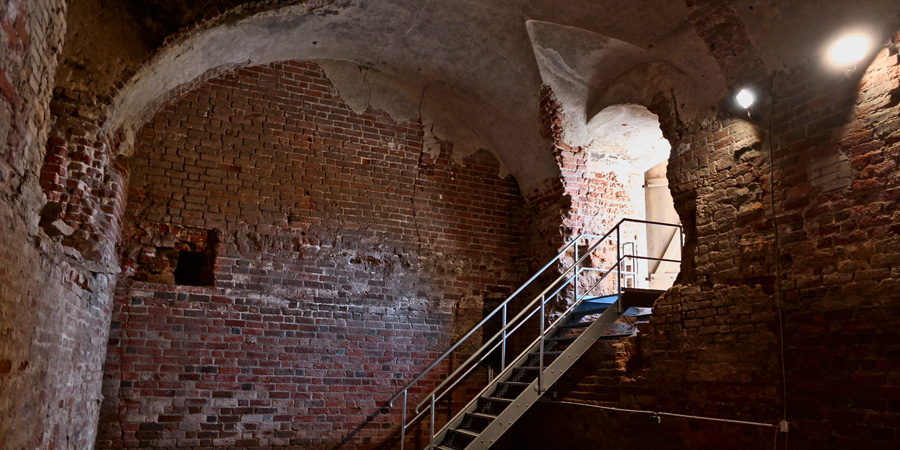
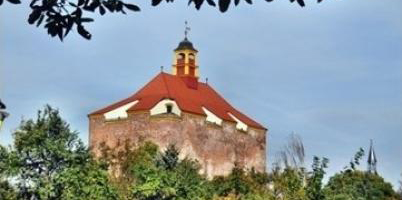
The Peitz Fortress Tower is the oldest building in the town of Peitz and has been used as a museum and cultural centre for many years. The special attraction of the fortress is its preservation as a structural monument, its history and beauty. The tower has walls up to 6 metres thick and reaches about 36 metres to the top.
Inside the fortress tower, the large banqueting hall, where wedding ceremonies and events are held annually, is impressive. In the museum area of the tower, exhibitions about the history of the fortress are shown.

Special exhibitions/ accompanying offers

  • Visit the large festival hall and recommend the magnificent view from the ridge turret of the fortress tower far beyond Peitz.
  • The exhibition on the fortresses of Peitz, Spandau and Küstrin as well as the exhibition "Digital map table and staged whispering figures" inform the guest in a special way.
  • The newly designed fortress area invites you to linger.
  • Wedding ceremonies and festive events are held.

Offers for children - With Kobi to the museum

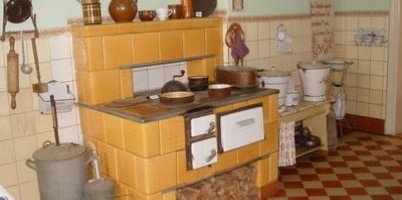
Kobi - the little house ghost - is at home in the museum. He lives there in a slipper under the stove. At midnight, he eavesdrops on the old museum pieces when they tell stories about the past. He tells these exciting stories to the museum staff, who then pass them on to the children - stories from the old, old days.

Kobi offers:

Guided tour of the Peitz Fortress Tower

The fortress tower is located in the heart of the town of Peitz, in the middle of the historic old town centre.

During the guided tour, visitors learn a lot of interesting facts about the fortress tower as well as about the history of the city and the region.
The offer takes place indoors and is aimed at students in grades 1 to 13.
Date: by arrangement
Duration: approx. 1 hour
Pre-registration: one week before at the latest
Peitz Fortress Tower
Fortress Route
Mrs Medack
03185 Peitz/ Picnjo
Phone: 035601 / 22080
Fax: 035601 / 22080
E - Mail: museum@peitz.de


Gallery


Erwin Strittmatter Memorial "The Shop" Bohsdorf / Wopomnišćo Erwina Strittmattera "Loda" Bóšojce

GalleryExhibitions | Offers for children 1

Local history memorial with literary-historical collection - original setting of the well-known novel trilogy "Der Laden" (The Shop)

Building / plot situation

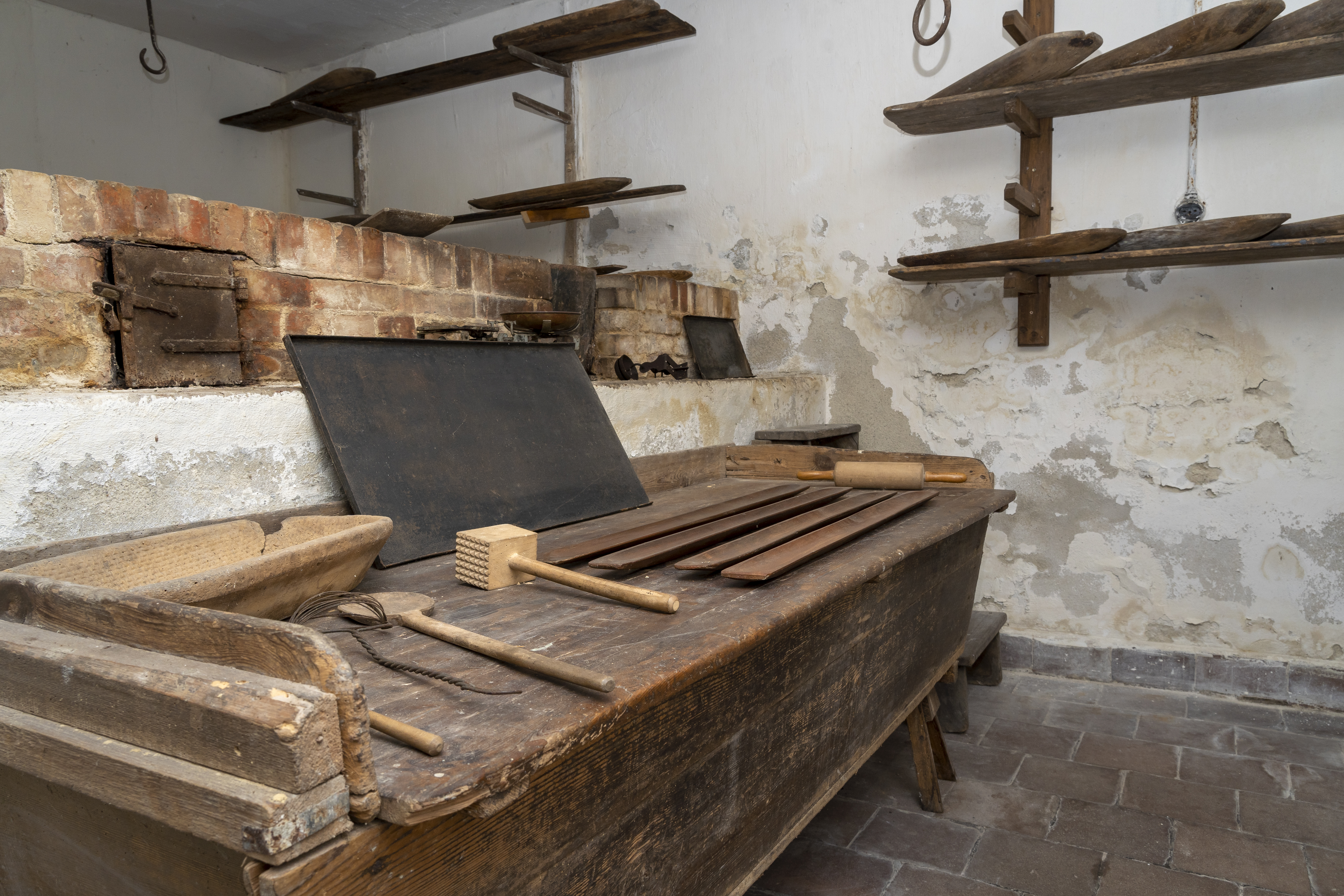
The brick residential building with shop and attached bakery at Dorfstraße 37 was built around 1895 and acquired by Strittmatters' parents from relatives in June 1919. The village shop and bakery were run by the family until 31 December 1949. Since 30 January 1999, "Der Laden" has been open to the public as a museum memorial.

Characteristics

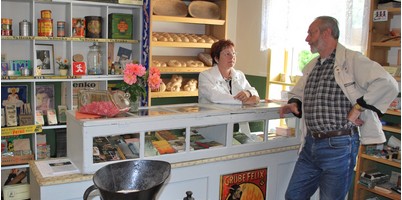
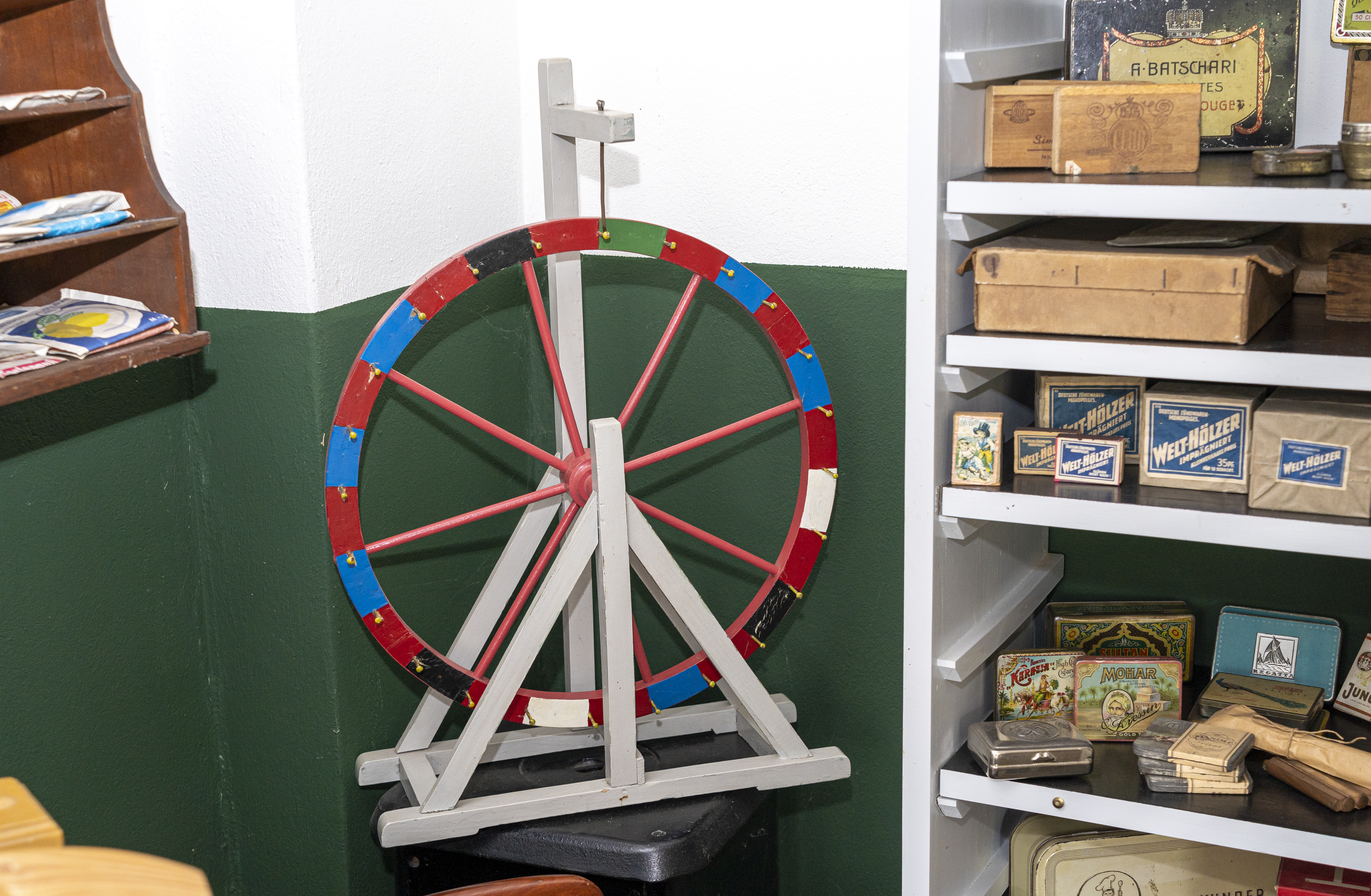
"The shop" - as an authentic place of Erwin Strittmatter's and his family's work - is modelled on the sales facilities of the 1920s and 1930s using original equipment, with individual exhibits dating from the post-war period. This historic village or "colonial goods shop" forms the core of the Bohsdorf memorial. In the adjoining room, which once belonged to the bakery, there is a small exhibition on the family, the historical setting of the "Laden" trilogy and the work of Erwin Strittmatter.
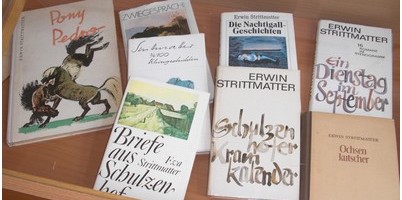
The exhibition area has now been extended to the former living rooms. In the media room, the former boys' dormitory, it is now possible to watch films about Erwin Strittmatter or listen to the audio books "Laden 1-3" and "Pony Pedro" read by Erwin Geschonneck.
Since 2014, the exhibits of the former "Ochsenkutscher" (exhibition of the Krechlock family in Jerischke) have been located in the barn of the Strittmatter property.

Special exhibitions / accompanying offers

  • In the meeting place, groups are given the opportunity to experience slide or video presentations around film production (Jo Beyer) (video presentation 8,- €).
  • Guided circular walk: For interested visitors, a 1.7 km signposted circular walk is marked in Bohsdorf, along which other historical sites of the novel trilogy can be visited. Guided walks of 1 or 2 hours are organised for groups of 10 or more by prior arrangement.

Offers for children - With Kobi to the museum

Kobi - the little house ghost - is at home in the museum. He lives there in a slipper under the stove. At midnight, he eavesdrops on the old museum pieces when they tell stories about the past. He tells these exciting stories to the museum staff, who then pass them on to the children - stories from the old, old days.

Kobi offer:

 On the trail of Erwin Strittmatter in Bohsdorf

Children and young people are to be familiarised with the life and work of the poet Erwin Strittmatter at authentic locations in Bohsdorf, receive their first ideas about the beauty of his language and be encouraged to read his works.

  • Guided tour of the shop
  • Documentaries on the life and work of the writer Erwin Strittmatter
  • Quiz with prizes
  • Painting/drawing in the courtyard or in the "Unter Eechen" meeting place

The programme takes place indoors and outdoors and is aimed at students in grades 5 to 12.
Dates: by arrangement
Pre-registration: at least 2 weeks in advance

Duration:

  • Guided tour of the shop approx. 45 minutes
  • Documentaries on the life and work of the writer Erwin Strittmatter approx. 1 hour
  • Painting/drawing in the courtyard or in the meeting place "Unter Eechen".
  • approx. 2 to 3 hours

Group size: up to 30 people
Admission per person: € 2.50
Children and teenagers: 0,50 €

NoteThe offer also comes to the school on request.
Prerequisite: DVD player should be available

Erwin Strittmatter Memorial Bohsdorf


Gallery


Sacro Village Museum / Wejsny muzej Zakrjow

GalleryExhibitions |  Offers for children1

Village museum with content-related inclusion of neighbouring communities

Building / plot situation

The Sacro Village Museum is located in the former home of Reinhard Natusch's parents-in-law. The one-storey dwelling house with a gable roof is a farmhouse already built of solid bricks, gable-ended to the village street on a former three-sided farm.

Characteristics

The local chronicler Reinhard Natusch has collected and continues to collect evidence of everyday village life in the northern districts of Forst (Lausitz), whereby the villages to the east of the Neisse River are expressly included in the collection and research efforts. A fund of original historical photographs from the surrounding villages is of interest. Five rooms in the house have been prepared for exhibition purposes, whereby the basic structure has been largely preserved, which lends a certain authenticity to the kitchen in particular. So we have a folkloristic collection here, which particularly seeks to establish its links to Sorbian / Wendish history.

Special exhibitions / accompanying offers

There are 2 special exhibitions a year. Thematically, they seek regional references and flank the intentions of the permanent exhibition.

Occasionally, events such as lectures and discussions are on the programme.

Larger actions are organised for the revived "Village Festival - Sacro".

Offers for children - With Kobi to the museum

Kobi - the little house ghost - is at home in the museum. He lives there in a slipper under the stove. At midnight, he eavesdrops on the old museum pieces when they tell stories about the past. He tells these exciting stories to the museum staff, who then pass them on to the children - stories from the old, old days.

Kobi offers:

On the trail of Sorbian/Wendish customs

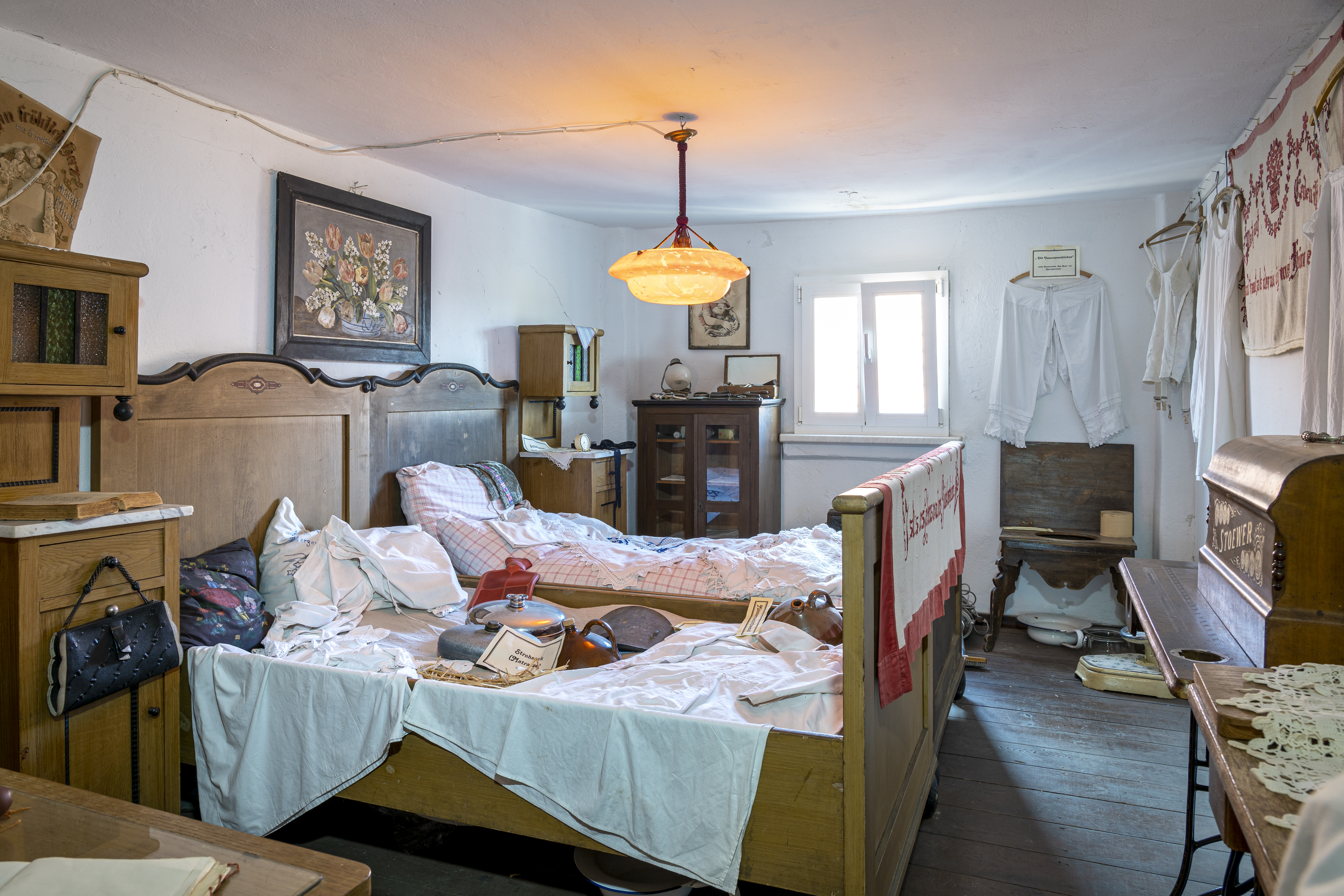
The village museum has brought together evidence of everyday life that documents the village way of life in the communities north of Forst and east of the Neisse River. The folkloristic collection is particularly relevant to Sorbian/Wendish history. A collection of original historical photographs from the surrounding villages is also interesting. On the upper floor of the museum, which is a half-timbered building, you can see a bedroom from 1900 as well as festive costumes worn by men and women from 1805. A tour of the upper floor, where exercise books from 1805, books from 1850 and a historical school blackboard are on display, provides insights into the Prussian primary schools.

The offer takes place indoors and is aimed at schoolchildren.
of classes 1 to 10.
Dates: by arrangement
Pre-registration: at least 2 weeks in advance

Sacro Village Museum


Gallery


Forster. Museum für Textil- und Industriegeschichte Lausitz / Baršć. Muzej za tekstilne a industrijne stawizny Łužyca

GalleryExhibitions |  Offers for children
1

Museum of technical history with urban history collection

Ab November 2025 laden erste Bereiche des sanierten historischen Fabrikgebäudes zum Entdecken ein. Erleben Sie erste Highlights und einen Vorgeschmack auf das, was noch kommt

Das neue Museum eröffnet seine ersten Türen und gewährt spannende Einblicke in die Geschichte von Forst (Lausitz), einer Stadt, die über Jahrhunderte hinweg ein industrielles Zentrum war. Noch ist die große Dauerausstellung im Aufbau, doch bereits jetzt können Besucher die folgenden Highlights entdecken:

    • Sonderausstellungen
    • Kulturprogramme
    • Historische Dampflok „Schwarze Jule“

2026 öffnet das Museum dann vollständig und präsentiert auf 1.600 m² die neue Dauerausstellung. Freuen Sie sich auf interaktive Bereiche, eine Schauwerkstatt und faszinierende Einblicke in die Industrie- und Stadtgeschichte.

Building / plot situation

The Brandenburg Textile Museum in Forst (Lausitz) is housed in the building of Daniel Noack's cloth factory, which was built in 1897.

The show workshop, designed as a permanent exhibition, is located in a large factory hall of approx. 500 m² on the ground floor of the building, which was renovated inside and out from 1994 to 1997.

Characteristics

The Brandenburg Textile Museum in Forst (Lausitz) is the only one of its kind in Brandenburg. It is important locally, regionally, statewide and even beyond the state and federal borders. The focus of the museum is on technology, but also on the history of industrial textile production in the town of Forst (Lausitz) from the end of the 19th century to around the middle of the 20th century.

Currently, a clothmaker's show workshop with machinery dating from 1900 to 1950 is the dominant focus of the presentation. In the show workshop, the entire manual and mechanical process of cloth production from spinning, winding and warping to weaving is explained and demonstrated. Visitors learn interesting facts about the working and living conditions in a textile factory. After the tour, guests can try out individual operations for themselves.

Special exhibitions / accompanying offers

On average, four special exhibitions are shown annually on the first floor (approx. 250 sqm). These are not thematically linked to textile history, but deal with art, photography, city history and cultural history. The special exhibitions are accompanied by author readings and lectures, among other things.

  • The museum offers an extensive educational programme on the textile production process, special exhibitions and the history of the city.
  • Creative groups in the museum for adults and children (artistic design with fabrics, threads, wool etc.)

Offers for children - With Kobi to the museum

Kobi - the little house ghost - is at home in the museum. He lives there in a slipper under the stove. At midnight, he eavesdrops on the old museum pieces when they tell stories about the past. He tells these exciting stories to the museum staff, who then pass them on to the children - stories from the old, old days.

Kobi offers:

1. "The Fat One" - Forster Water Tower

The visitors learn a lot of interesting facts about the history and functioning of the Forster water tower. The water supply in former times and today is shown in short forays. A tour of the water tower can be arranged on request.

Action: Re-creation of the water tower on the handloom frame.

The programme takes place indoors and outdoors and is aimed at pupils in grades 1 to 6.
Dates: by arrangement
Pre-registration at least 1 week in advance
Duration: approx. 3 to 4 hours
Group size: 5 to 20 people
Admission per person: € 3.50

Brandenburg Textile Museum Forst

2. "Schwarze Jule" - Forster city railway

The history of the Forster city railway can be experienced in the museum in pictures and words. Visitors will learn interesting facts from the first journey in 1893 to the last journey in 1965. Many questions will be answered. Why was the town railway built? Who benefited from this railway? What did it transport? Why was it ousted from the cityscape and from the transport system?

Action: Slide - lecture, playful activity in the replica of the "Black Owl" (handicraft sheet/paper)

The offer takes place indoors and is aimed at schoolchildren.
of classes 2 to 5.
Dates: by arrangement
Pre-registration: at least 1 week in advance
Duration: approx. 1.5 to 2 hours
Group size: 5 to 30 people
Admission per person: € 3.50

Brandenburg Textile Museum Forst

3. city tour and city rally

For once, the children experience our home town of Forst (Lausitz) very attentively, walk through old streets and learn a lot about the history of the once so vibrant textile town. Why do some streets still have small railway tracks today? The children have the opportunity to go on a search for clues. They are given interesting clues to specific buildings or facilities they are looking for. With this information, they can find the building they are looking for - and to finally solve the riddle, they take a photo of it.

In addition, we can organise the crypt (€1.00) and/or an ascent to the tower (€2.50) in the Stadtkirche. These costs are then payable to the Stadtkirche.

The offer takes place indoors and outdoors and is aimed at schoolchildren.
of classes 3 to 6.
Dates: by arrangement
Advance booking: at least 1 week in advance
Duration: approx. 2 to 2.5 hours
Group size: 5 to 30 people
Admission per person: € 3.50

Brandenburg Textile Museum Forst

4. how school used to be

The pupils gain an insight into the development of the school in the town of Forst (Lausitz). They see and hear about the first school building, the first subjects taught and strict teachers. Stories and reports from school life as well as writing with the goose quill and ink enrich this programme.
Action: Sitting on an old school bench, writing the Old German alphabet, cane for rehearsal

The offer takes place indoors and is aimed at schoolchildren.
of classes 3 to 6.
Dates: by arrangement
Pre-registration: at least 1 week in advance
Duration: approx. 2 to 3 hours
Group size: 5 to 30 people
Admission per person: € 3.50

Brandenburg Textile Museum Forst

5. robber baron Nickel von Rothe

Nickel von Rothe, a knight for the poor peasants? Or a robber baron who was persecuted and put out of business? The legendary Nickel von Rothe lived in Mückenhain near Forst at the end of the Middle Ages and wreaked havoc in the surrounding area. Interested visitors can see and hear this story in the museum.

Activity: Slide show with historical saga, knights making jumping jacks

The offer takes place indoors and is aimed at schoolchildren.
of classes 1 to 3.
Dates: by arrangement
Pre-registration: at least 1 week in advance
Duration: approx. 1.5 hours
Group size: 5 to 30 people
Admission per person: € 3.50

Brandenburg Textile Museum Forst

6. floods and their consequences

The pupils learn interesting facts about the flood disasters in and around Forst in words and pictures. A booklet explains various terms related to floods. From historical newspaper reports, the pupils hear about the night of the catastrophe in 1897. The effects of the flood waves of a flood are simulated on a model that shows the surface of the earth in cross-section.

Activity: Work with the accompanying booklet, observe the process in the flood model, build a sandbag wall

The offer takes place indoors and outdoors and is aimed at schoolchildren.
of classes 3 to 6.
Dates: by arrangement
Pre-registration: at least 1 week in advance
Duration: approx. 2 hours
Group size: 5 to 30 people
Admission per person: € 3.50

Brandenburg Textile Museum Forst

7. the Bieberstein coat of arms and the Forster coat of arms

In this programme, the pupils learn interesting facts about naming and heraldry. Many names, such as Meier, Schulze and Lehmann, used to have coats of arms. The Lords of Bieberstein also had various coats of arms. The coat of arms of the town of Forst has evolved from the large Bieberstein coat of arms. What it looks like, what shape and colour it has, is taught to the pupils in this programme.

Activity: Worksheets with coats of arms for colourful design

The offer takes place indoors and is aimed at schoolchildren.
of classes 3 to 6.
Dates: by arrangement
Pre-registration: at least 1 week in advance
Duration: approx. 1 to 1.5 hours
Group size: 5 to 30 people
Admission per person: € 3.50

Brandenburg Textile Museum Forst

8. industrialisation

Many empty factories and the railway tracks of the "Black Jules" tell of the once vibrant "German Manchester". There are reports about personalities who helped Forst to industrial growth and prestige. What conditions were necessary for the operation of mechanical machines? What is the connection between industrial development in Forst and the living conditions of employees and employers? How are yarn and cloth made today? We will explore many questions together and find answers.

Activity: Work with video clips, old address books and chronicles, recording technical data of the machines in the clothmaker's show workshop and city tour

The offer takes place indoors and outdoors and is aimed at schoolchildren.
of grades 8 to 10.
Dates: by arrangement
Pre-registration: at least 1 week in advance
Duration: approx. 3 hours
Group size: 5 to 30 people
Admission per person: € 3.50

Brandenburg Textile Museum Forst

9. sew a cosy patchwork cushion yourself

Patchwork - this artistically appealing textile work literally means "patchwork". This creative technique was first used in ancient Egypt, more than 2000 years ago. For thousands of years, people all over the world have puzzled pieces of fabric together out of necessity or for fun and then sewn them together to make a "new fabric" again. Ingenuity, different materials and cultural differences have resulted in a multitude of different patterns and patchwork techniques.

Action: Sewing a patchwork cushion

The offer takes place indoors and is aimed at schoolchildren.
of classes 6 to 10.
Dates: by arrangement
Pre-registration: at least 1 week in advance
Duration: approx. 1 to 1.5 hours
Group size: 5 to 30 people
Admission per person: € 3.50

Brandenburg Textile Museum Forst

10. thread pictures

In the clothmaker's show workshop, the pupils experience the work steps that are necessary to produce a thread. The demonstrations are shown on the historical hand tools and the machines from the 20th century. The hand-operated and machine processes are demonstrated on the spinning wheel, winding wheel, sample carding machine, selfactor and ring spinning machine and explained by the specialist staff. In a subsequent practical activity, the visitors make a work of thread art from many colourful threads on a stenter frame.

The offer takes place indoors and is aimed at schoolchildren.
of classes 3 to 6.
Dates: by arrangement
Pre-registration: at least 1 week in advance
Duration: approx. 1.5 hours
Group size: 5 to 30 people
Admission per person: € 3.50

Brandenburg Textile Museum Forst

11. felting with sheep's wool

On a tour of the clothmaker's workshop, pupils learn how sheep's wool is processed. Pupils can try out wet or dry felting and make their own accessories for the home.

The offer takes place indoors and is aimed at schoolchildren.
of classes 3 to 6.
Dates: by arrangement
Pre-registration: at least 1 week in advance
Duration: approx. 2 hours
Group size: 5 to 30 people
Admission per person: € 3.50

Brandenburg Textile Museum Forst

 12. fabric hearts

In the clothmaker's workshop, the pupils learn how cloth is made. They see and hear how work was done on the historical hand tools and machines. In particular, they can follow the technical development from the hand loom to the mechanical loom. Furthermore, the visitors learn a lot of interesting facts about the historical development of the handicraft technique "patchwork" in a short introduction. Patchwork" means "patchwork" in translation. The pupils work in the simple patchwork gluing technique. They put the differently coloured patterned pieces of fabric together and join them by gluing and sewing.

The offer takes place indoors and is aimed at schoolchildren.
of classes 3 to 6.
Dates: by arrangement
Pre-registration: at least 1 week in advance
Duration: approx. 2 hours
Group size: 5 to 30 people
Admission per person: € 3.50

Brandenburg Textile Museum Forst

13. flower magic from fabric scraps

In the clothmaker's workshop, the pupils learn how cloth or fabric is made. They see and hear how work was done on the historical hand tools and machines. Among other things, they can follow the technical development from the spinning wheel to the spinning machine. In this museum educational programme, the pupils work with coloured fabric remnants made of cotton or synthetics. They can choose the colours freely according to their sensibilities. Creating a jewellery ball is purely a handicraft and requires a little more time and perseverance.
(Use as room or window decoration, suitable for the seasons and for Christmas time)

In the clothmaker's workshop, the pupils learn how cloth or fabric is made. They see and hear how work was done on the historical hand tools and machines. Among other things, they can follow the technical development from the spinning wheel to the spinning machine. In this museum educational programme, the pupils work with coloured fabric remnants made of cotton or synthetics. They can choose the colours freely according to their sensibilities. Creating a jewellery ball is purely a handicraft and requires a little more time and perseverance.
(Use as room or window decoration, suitable for the seasons and for Christmas time)

The offer takes place indoors and is aimed at schoolchildren.
of classes 4 to 6.
Dates: by arrangement
Pre-registration: at least 1 week in advance
Duration: approx. 2 to 2.5 hours
Group size: 5 to 30 people
Admission per person: € 3.50

Brandenburg Textile Museum Forst

14. thin threads become a strong cord

The pupils are given a special demonstration on the braiding machine in the clothmaker's show workshop. They observe how this machine creates a firm, braided cord through fast rotating movements around its own axis and through tense, pulling movements. With these made cords, the pupils can make simple or more sophisticated jewellery elements. Old handicraft techniques, such as braiding with ribbons or knotting in simple steps, are offered as practical work.

The offer takes place indoors and is aimed at schoolchildren.
of classes 3 to 6.
Dates: by arrangement
Pre-registration: at least 1 week in advance
Duration: approx. 1-1.5 hours
Group size: 5 to 30 people
Admission per person: € 3.50

Brandenburg Textile Museum Forst
15. a woven cloth becomes a doily

The historical exhibition includes the hand spinning wheel, the hand winding wheel, the warping frame and the hand loom. The pupils see and hear how work was done on the historical hand tools. In this area they can still grasp the making of the thread and the weaving of a cloth with the naked eye. Each pupil receives a woven piece of cloth. By pulling out individual threads from the edge of the cloth, fringes are created which form the outside of the doily. More threads can be pulled out of the inner part of the doily. This creates a decorative pattern in the doily.

The programme takes place indoors and is aimed at 5 to 7-year-olds or pupils up to grade 2.
Dates: by arrangement
Pre-registration: at least 1 week in advance
Duration: approx. 1 hour
Group size: 5 to 30 people
Admission per person: € 3.50

Brandenburg Textile Museum Forst

16. napkin technique

The pupils are given a guided tour of the clothmaker's workshop on the topic "From wool to cloth". They learn a lot of interesting facts about the historical machines that are necessary to process the wool in order to make a cloth.

The offer takes place indoors and is aimed at schoolchildren.
of classes 3 to 6.
Dates: by arrangement
Pre-registration at least 1 week in advance
Duration: approx. 1 to 1.5 hours
Group size: 5 to 30 people
Admission per person: € 3.50

Brandenburg Textile Museum Forst
How was washing done in the past?

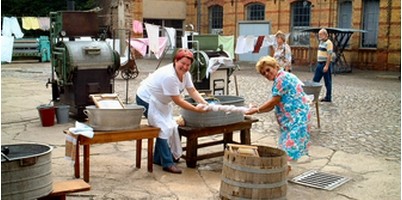
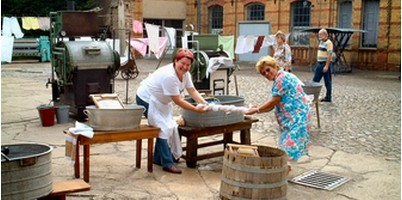
In the museum courtyard, the pupils visit the open-air exhibition on the subject of "Washing clothes". Afterwards, they can try out for themselves how laborious washing was for women in the past. The focus is on washing on the washboard, hanging up laundry and rolling laundry with a hand roller.

Hint:
Laundry items, such as your own socks and tea towels, are particularly good for working with.

The programme takes place indoors and outdoors and is aimed at pupils in grades 2 to 6.
Dates: by arrangement
Pre-registration: at least 1 week in advance
Duration: approx. 2.5 to 3 hours
Group size: 10 to 30 people
Admission per person: € 3.50

Brandenburg Textile Museum Forst

18. we make our own paper

People have been leaving messages or making records for a long time. Early humans painted the walls of their caves, the Egyptians wrote their hieroglyphics on papyrus, the Romans on wax tablets, and in the Middle Ages monks used parchment made from animal skin. The pupils learn a lot of interesting facts about the history and production of paper and how they can make it themselves.

Action: Making paper

The offer takes place indoors and is aimed at schoolchildren.
of classes 3 to 8.
Dates: by arrangement
Pre-registration: at least 1 week in advance
Duration: approx. 2 to 2.5 hours
Group size: 10 to 30 people
Admission per person: € 3.50

Brandenburg Textile Museum Forst

19. how the mole got a pair of trousers

The picture book story about Pauli the mole, who wants a pair of trousers with big pockets, is read. The children hear and see many different animals in the story. Each animal masters a different craft. For example, the spiders, they spin the threads for Paul the mole to weave the trousers. The industrious ants hammer, saw and carpenter the loom. The cloth is woven on the loom. Pauli the mole and many animals manage to make the trousers with the big pockets by working together. In the clothmaker's show workshop, the children experience the making of a cloth during a demonstration of the machines.

Action: Dressing the mole figure

The offer takes place indoors and is aimed at schoolchildren.
of classes 1 to 2.
Dates: by arrangement
Pre-registration: at least 1 week in advance
Duration: approx. 1.5 hours
Group size: 5 to 30 people
Admission per person: € 3.50

Brandenburg Textile Museum Forst
20. weaving on the handloom frame

In the clothmaker's workshop, visitors learn how cloth is made. They see and hear how work was done on the historical hand tools and machines. In particular, visitors can follow the technical development from the hand loom to the mechanical loom. In the subsequent practical activity, the pupils practise weaving on the handloom frame. The richly coloured yarns and various effect yarns used as weft create unique artistic pieces.

The offer takes place indoors and is aimed at schoolchildren.
of classes 3 to 7.
Dates: by arrangement
Pre-registration: at least 1 week in advance
Duration: approx. 2 to 2.5 hours
Group size: 5 to 30 people
Admission per person: € 3.50

Brandenburg Textile Museum Forst
Gallery


Archive of Vanished Places / Archiw zgubjonych jsow

GalleryExhibitions | Offers for children1

Documentation and exhibition centre and agricultural history collection

The archive of vanished places is moving !

IMPORTANT NOTE:
After 18 years, the permanent exhibition "Documentation of Mining-Relocations" in the Archive of Vanished Places is leaving its previous location and will become part of the new exhibition at the Brandenburg Textile Museum Forst (Lausitz).
The exhibition will be permanently closed from 14 September 2024.
Further information about the new museum can be found at: www.forst-lausitz.de

Building / plot situation

The Documentation Centre found its home at the resettlement site of Forst-Eulo in the newly built community centre of today's Forst district of Horno. It was opened on 14 October 2006.
The converted farm barn houses an agricultural history collection.

Characteristics

In connection with the resettlement of the village of Horno to Forst (Lusatia), the idea arose to establish a central information centre that would scientifically document the history of those 137 places in Lusatia and their inhabitants that had to make way for open-cast mining in whole or in part since 1922 (over 25,000 people lost their homes during this period).
In a modern, multimedia presentation, topics such as the history of the Lusatian lignite mining area, the history and present of site demolitions, the effects of resettlement from a socio-cultural and ethnological point of view (Lusatia as a historical settlement area of the Sorbs / Wends) are conveyed. Also documented is the conflict in the process of resettling the community of Horno.

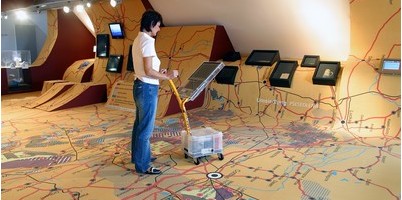
The centrepiece of the exhibition is a walk-through map in the form of a carpet that shows the entire Lusatian mining area. Visitors can use an interactive "Infosauger" to digitally navigate to all the disappeared places.


Archäotechnisches Zentrum Welzow / Archeotechniski centrum Wjelcej

GalleryExhibitions |  Offers for children 
atz1

Archaeology up close! Everything to touch & participate in

Building / plot situation

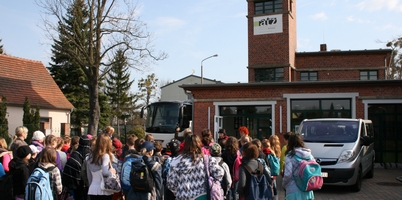
The ATZ is located in the brick building built in 1928, which originally housed the works fire brigade and first-aid station of Eintracht Braunkohlenwerke und Brikettfabriken AG. The ATZ's activities also include the Epoch Garden, an activity area with recreated excavation sites, Lake Clara and the reconstructed past with the open-air installation "Klein Görigk".

Characteristics

As an extracurricular educational institution, the Förderverein Archäotechnisches Zentrum Welzow e.V. (Welzow Archaeotechnical Centre Sponsorship Association) deals with the presentation of all issues related to archaeology and implements findings from state archaeology and experimental archaeology for visitors in a way that appeals to the public.Archaeotechnology is the second focus of its work. Archaeotechnology means dealing with the work processes and knowledge of our ancestors. The centre's educational programme offers all interested visitors, from young to old, opportunities to do something about the topic of wood in prehistory. The focus is not on watching, but on doing it yourself!

Special exhibitions / accompanying offers

  • Experimental archaeology
  • Restoration
  • Museum education
  • Excavation
  • Wood storage in Lake Clara

Offers for children - With Kobi to the museum

Kobi - the little house ghost - is at home in the museum. He lives there in a slipper under the stove. At midnight, he eavesdrops on the old museum pieces when they tell stories about the past. He tells these exciting stories to the museum staff, who then pass them on to the children - stories from the old, old days.

Kobi offers:

1. walk through the stone age

Visitors get to know the Archaeotechnical Centre with its exhibition and epoch garden. After an introduction to Stone Age archaeology with the centre's suitcase full of tools and equipment from the Stone Age, the exhibition Man - Wood - Archaeology follows in the footsteps of the Ice Age hunters and the first farmers and cattle breeders. In the epoch garden, Stone Age handicraft techniques are tried out and experiments are carried out with the steel of the Stone Age - the flint stone - and fire is made and played with. The project day ends with a hearty Stone Age meal with homemade bread from the Stone Age clay oven.

The programme takes place outdoors and is aimed at pupils in grades 1 to 10.
Dates: by arrangement
Advance booking absolutely necessary: at least 2 weeks in advance
Duration: at least 4 hours (and longer)
Group size: 10 to 25 people
Admission per person: €10.00

Cameras or camera phones can be brought along for documentation.

Welzow Archaeotechnical Centre

2nd Walk through the Middle Ages

Visitors get to know the Archaeotechnical Centre with its exhibition and epoch garden. After an introduction to the archaeology of the Middle Ages with the centre's suitcase full of tools and equipment from the Middle Ages, the exhibition Man - Wood - Archaeology follows the traces of medieval settlement in Lower Lusatia. In the epoch garden, medieval handicraft techniques are tried out and fires are made with flint and chisels. After visiting real medieval findings in the Klein Görigk open-air installation, the project day ends with games and a hearty meal from the medieval pot and home-baked bread from the clay oven.

The offer takes place outdoors and is aimed at students of the
Grades 1 to 10.
Dates: by arrangement
Pre-registration: at least 2 weeks in advance, pre-registration is absolutely necessary!
Duration: at least 4 hours (and longer)
Group size: 10 to 25 people
Admission per person: €10.00

Cameras or camera phones can be brought along for documentation.

Welzow Archaeotechnical Centre

3. excavate once like the archaeologists

Visitors learn about an excavation: what is an archaeological finding and how does one go about uncovering all the beautiful things it hides within? Shovel, trowel and scraper, but also paper and pencil are needed to follow the steps of the archaeologist until a vessel from the Stone Age, the Bronze Age or the Iron Age can finally be taken out of the earth and everyone can marvel at it.

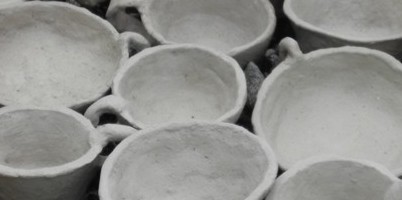
The Archaeotechnical Centre works with replicas. This means that if a vessel is damaged during excavation - never mind, the archaeological ceramics working group will make new ones. The flints found in the Stone Age features are freshly cut and therefore sharp!

The offer takes place outdoors and is aimed at students of the
Grades 1 to 10.
Dates: by arrangement
Advance booking absolutely necessary: at least 2 weeks in advance
Duration: at least 4 hours (and longer)
Group size: 10 to 25 people
Admission per person: € 8.00
Cameras or camera phones can be brought along for documentation.

Welzow Archaeotechnical Centre

4. a cap full of archaeology

Visitors get to know the Archaeotechnical Centre with its exhibition, its epoch garden, Lake Clara and the open-air installation Klein Görigk. After an introduction to archaeology, the tour goes through the exhibition Man - Wood - Archaeology; guaranteed free of vitrines and everything to touch and try out. Afterwards, there will be a walk to Lake Clara, where the archaeological wood of Brandenburg is stored like in a magazine - only under water! Finally, we visit real archaeological findings from the Middle Ages from the Welzow-Süd open-cast mine, which have been reconstructed in an open-air installation. The only medieval barn from Brandenburg that could be reconstructed on the basis of excavation findings is also located here.

The offer takes place outdoors and is aimed at students of the
Grades 1 to 10.
Dates: by arrangement
Pre-registration: at least 2 weeks in advance, pre-registration is absolutely necessary!
Duration: at least 3 hours (and longer)
Group size: 10 to 25 people
Admission per person: €10.00

Cameras or camera phones can be brought along for documentation.

Welzow Archaeotechnical Centre

5. seven tests through prehistory

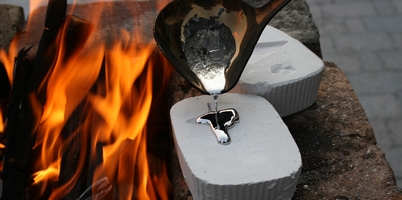
The visitors are given a typical task at each of 7 stations, which must be solved in the group in half an hour. Then the station is changed. The event includes fire making, leather cutting, pottery, drilling, wall building, wax casting and an excavation. Along the way, there is cooking for everyone and delicious food from the hordes pot and the clay oven.

The offer takes place outdoors and is aimed at students of the
Grades 1 to 10.
Dates: by arrangement
Pre-registration: at least 2 weeks in advance
Duration: at least 6 hours
Group size: 20 to 80 people
Admission per person: €15.00
Cameras or camera phones can be brought along for documentation.

Welzow Archaeotechnical Centre

Gallery


"Old School" Graustein / "Stara šula" Syjk

GalleryExhibitions |  Offers for children 
old_school

Where Strittmatter went to school

Building / plot situation

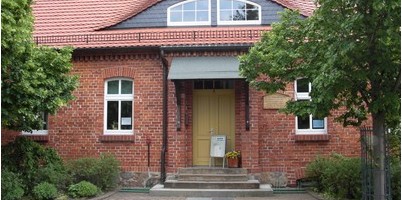
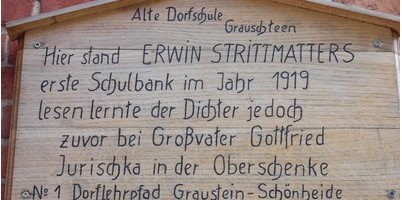
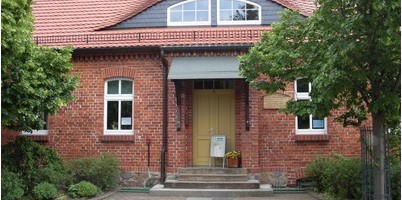
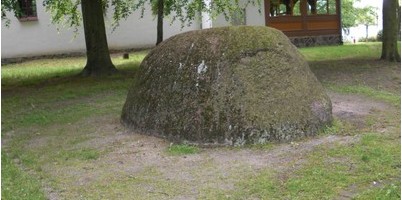
The church, in the middle of the village green with its slate-roofed tower and the gilded weather vane with the cockerel, is the landmark of the village. In its immediate vicinity is the "Old School", which is also the community centre. Erwin Strittmatter, Spremberg's most famous son, was enrolled in this school in 1919. The stone that gave the village its name is also right next to the church.

Characteristics

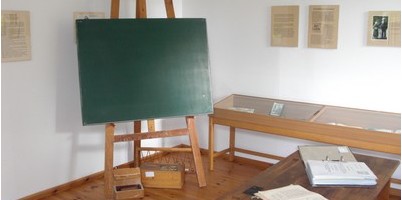
The former classroom houses two exhibitions, "Strittmatter and Graustein" and "School in Strittmatter's Time".

Special exhibitions / accompanying offers

  • Village nature trail with 14 stations / for school groups picture rally "In the footsteps of Strittmatter in Graustein".
  • Sportlerklause
  • Connection to the cycle path

Offers for children - With Kobi to the museum

Kobi - the little house ghost - is at home in the museum. There he lives in the slipper under the stove. At midnight he eavesdrops on the old museum pieces when they tell stories about the past. He tells these exciting stories to the museum staff, who then tell them to the children - stories from the old, old days.

Kobi offer:

In the footsteps of Erwin Strittmatter in Graustein

The former classroom of the "Old School" houses two exhibitions: "Strittmatter and Graustein" and "School in Strittmatter's Time". In addition, there is the possibility to go on the picture rally "In the footsteps of Strittmatter in Graustein". Various tasks have to be solved in small groups in order to learn more about the writer's childhood years in Graustein, as well as interesting facts about the nature and history of the place and the region. In the picture folder, some stations are also covered with literary excerpts from Erwin Strittmatter's "Shop Trilogy".

The programme takes place indoors and outdoors and is aimed at pupils in grades 3 to 8.
Dates: by arrangement
Pre-registration: 2 weeks before
Duration: approx. 2.5 hrs.
Group size: up to 20 people

"Old School" Graustein

Gallery


"Alte Mühle" Proschim / "Stary młyn" Prožym

GalleryExhibitions |  Offers for children
old_mill_proschim

Agricultural technology and the rural way of life

Building / plot situation

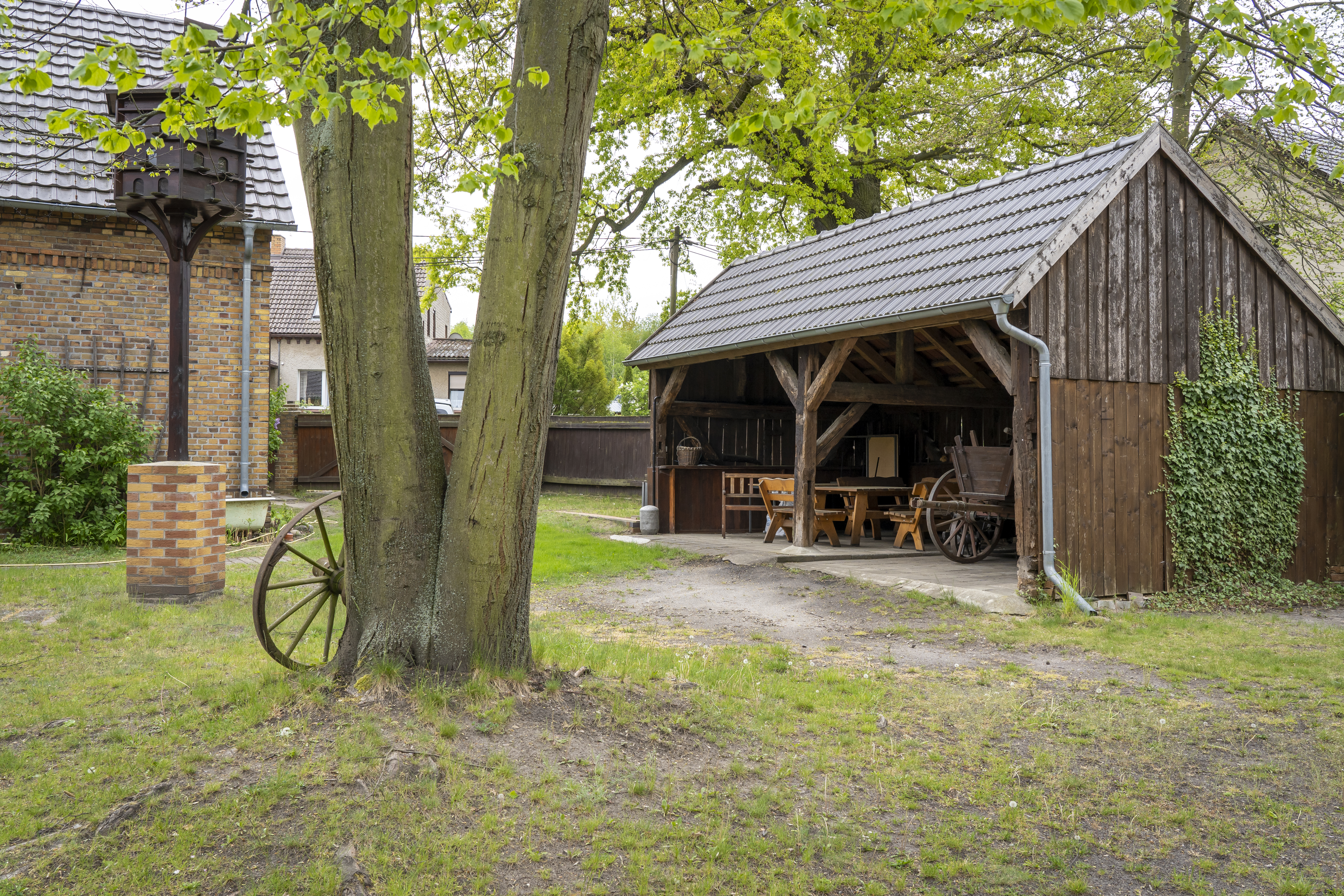
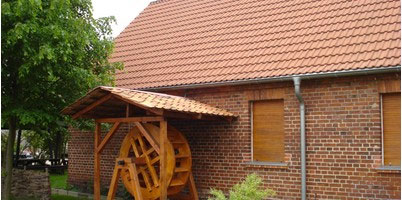
The exhibition can be experienced in the rooms of a mill building erected at the beginning of the 20th century, the electrically operated successor to the former trestle windmill at the same location. The red brick building complex - in the arrangement a closed four-sided courtyard - has been completely renovated on the "outer shell" (roof / façade / windows) in recent years.

Characteristics

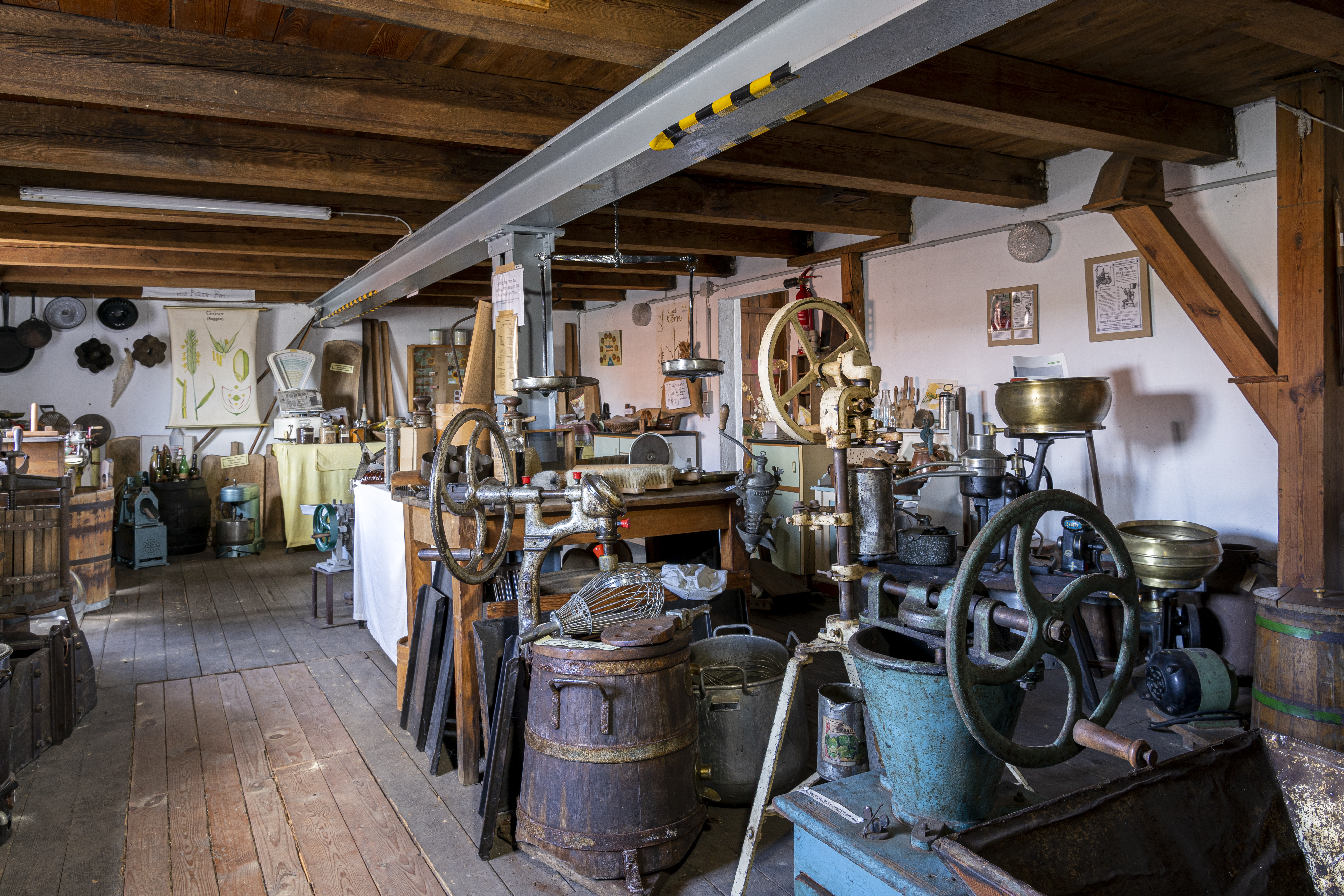
The exhibition activities of the association "Traditionelle Landtechnik und bäuerliche Lebensart Proschim e.V." (Traditional Agricultural Technology and Rural Way of Life Proschim) focus on regional folklore. In the exhibition rooms of the mill, visitors can see an exhibition of rural furniture, domestic tools, small-scale agricultural technology and village crafts. The collection of historical agricultural technology is of particular importance beyond the region. In the exhibition, reference is made to the Sorbian / Wendish roots through bilingual labelling. The mill technology, which is still partly preserved on site, is included in the presentation.

Special exhibitions / accompanying offers

An annual special exhibition is held at the village festival.
The exhibition is regularly rearranged, for example to show newly acquired exhibits.

  • Action days with demonstrations of agricultural technology, historical household appliances, food processing and much more.
  • The exhibition and event concept of the association also includes the inclusion of particularly original properties; on special occasions, such as the "Landpartie", the "German Mill Day", village festivals and other festive days, the objects are open and the private properties together with collection items are presented as an "open farm".
  •  On request, museum educational programmes and lectures on a wide range of topics are held for schoolchildren as well as in the context of rural adult education.

Offers for children - With Kobi to the museum

Kobi - the little house ghost - is at home in the museum. There he lives in the slipper under the stove. At midnight he eavesdrops on the old museum pieces when they tell stories about the past. He tells these exciting stories to the museum staff, who then tell them to the children - stories from the old, old days.

Kobi offers:

Exhibition of agricultural technology and peasant way of life:

An excursion into regional folklore through small-scale farming techniques and village life and crafts.

Ground floor: history of the mill and the village of Proschim as well as exhibition of mill models and grist mills

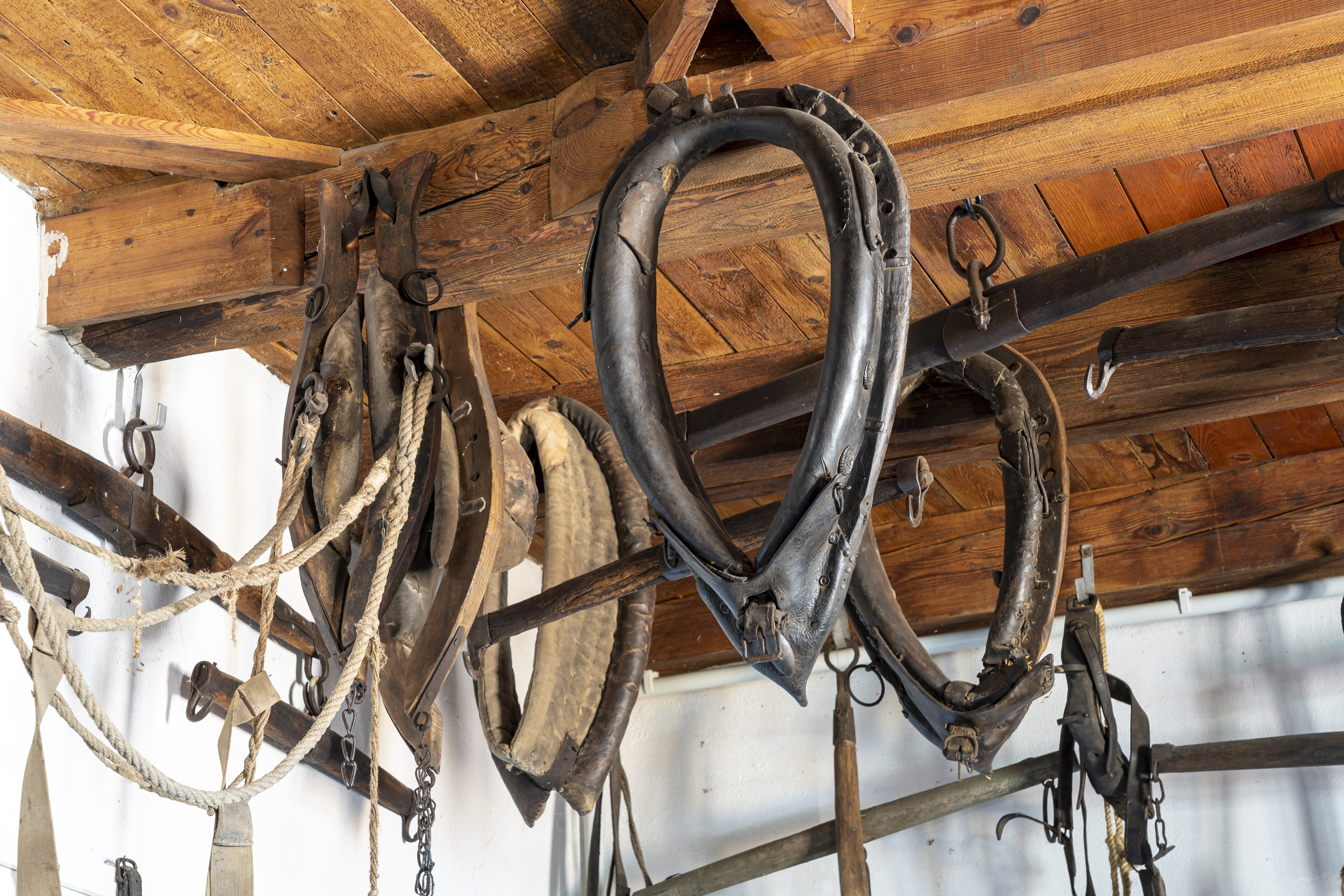
1st floor: straw processing, churning butter, baking, cereals, preserving crops, laundry, living quarters, kitchen, childcare, textiles, saddlery machine

2nd floor: potato cultivation, soil cultivation, garden tools, shoemaking, weaving, spinning, beekeeping, lift and transmission

Farm: small animal husbandry, home slaughtering, bakery, laundry cleaning, bicycle exhibition

The programme takes place in the "Alte Mühle" and on the Mühlenhof. It is aimed at pupils in grades 1 to 12.
Pre-registration: one week before
Duration: approx. 2 hrs.
Group size: 10 to 40 people
Admission per person: € 1.50

"Old Mill" Proschim

Gallery


December 2025
MTWTFSS
1 2 3 4 5 6 7
8 9 10 11 12 13 14
15 16 17 18 19 20 21
22 23 24 25 26 27 28
29 30 31     
" Nov   Jan "

kobi